
Análisis completo de Cluster Pays - Desde reglas de adyacencia hasta Gemix, Aloha y Sugar Rush
Cluster Pays es el método de pago según el tamaño del grupo de símbolos idénticos que se tocan horizontalmente o verticalmente. Hemos organizado la regla de juicio, el tamaño de la cuadrícula, la historia que se extiende desde 2004 y por qué siempre se usa junto con cascadas (tumble) utilizando datos oficiales del proveedor.

Resumen de características
- Cluster Pays usa el tamaño del grupo de símbolos iguales conectados horizontal o verticalmente para determinar los pagos, y la mayoría no reconoce conexiones diagonales.
- El nombre ‘Cluster Pays’ apareció primero en Aloha! Cluster Pays de NetEnt en marzo de 2016, pero la misma regla ya existía en Gemix de Play’n GO en diciembre de 2014 y, según la descripción de Big Time Gaming, en Chain Reactors desde 2004.
- Clusters rarely form all at once, so most cluster slots use cascades (tumbles); early NetEnt games used sticky respins instead.
- El tamaño mínimo (5, 6, 9 símbolos) y la cuadrícula (desde 5×3 hasta 9×9 o variable) varían según el juego, así que verifica primero la pantalla de información del juego.
Cluster Pays es un método de pago en tragamonedas sin líneas de pago predefinidas, donde los pagos se basan en el tamaño del cluster (grupo) de símbolos iguales conectados horizontal o verticalmente. Normalmente se necesitan 5 o más símbolos conectados para ganar, y los símbolos conectados solo en diagonal no cuentan. La mayoría de las tragamonedas de cluster combinan esto con una función de cascada (tumble) que elimina clusters ganadores y deja caer nuevos símbolos.
This article breaks down Cluster Pays from its judging rules outward: what exactly ‘touching’ means, why grid size matters, how this method spread from early 2000s grid games through NetEnt’s trademarked name to Pragmatic Play, Nolimit City, and Hacksaw Gaming-and why clusters struggle without cascades. For a quick look at terminology alone, our wiki’s Cluster Pays entry works too.
Tres reglas de veredicto – Vecindad, tamaño mínimo, tamaño del grupo
Es más fácil entender la pantalla de tragamonedas de cluster viéndola como una cuadrícula tipo tablero de ajedrez en lugar de carretes. Cuando termina un giro, el juego escanea toda la cuadrícula para encontrar clusters formados por símbolos iguales conectados. Casi todos los juegos usan las mismas tres reglas en este punto.
- Neighbor definition: A cell’s neighbors are only the four cells directly above, below, left, and right. Diagonal cells touching only at a corner are not neighbors.
- Tamaño mínimo: el cluster debe tener al menos una cantidad definida para ganar. 5 es lo más común, pero varía según el juego.
- Cluster size payout: Larger clusters of the same symbol pay more. Payout tables list amounts by size bracket: ‘5, 6, 7… 15+’.
Neighbor count - The grid by numbers
Convert the neighborhood rule to numbers and the grid’s nature appears. A 7×7 grid has 49 cells. The four corners have 2 neighbors each, the 20 non-corner edges have 3 neighbors each, and the 25 interior cells have 4 neighbors each. Counting pairs of touching cells: 7 rows × 6 horizontal pairs + 7 rows × 6 vertical pairs = 84 pairs total.
Using the same counting method, a 6×5 grid has 49 pairs, an 8×8 grid has 112 pairs, and a 9×9 grid has 144 pairs. As the grid grows, clusters have more room to expand, and multiple clusters can form on screen simultaneously. However, more cells don’t automatically mean easier wins. Providers adjust the number of symbol types, their appearance rates, and minimum cluster size to balance the overall math.
What changes if diagonals are excluded?
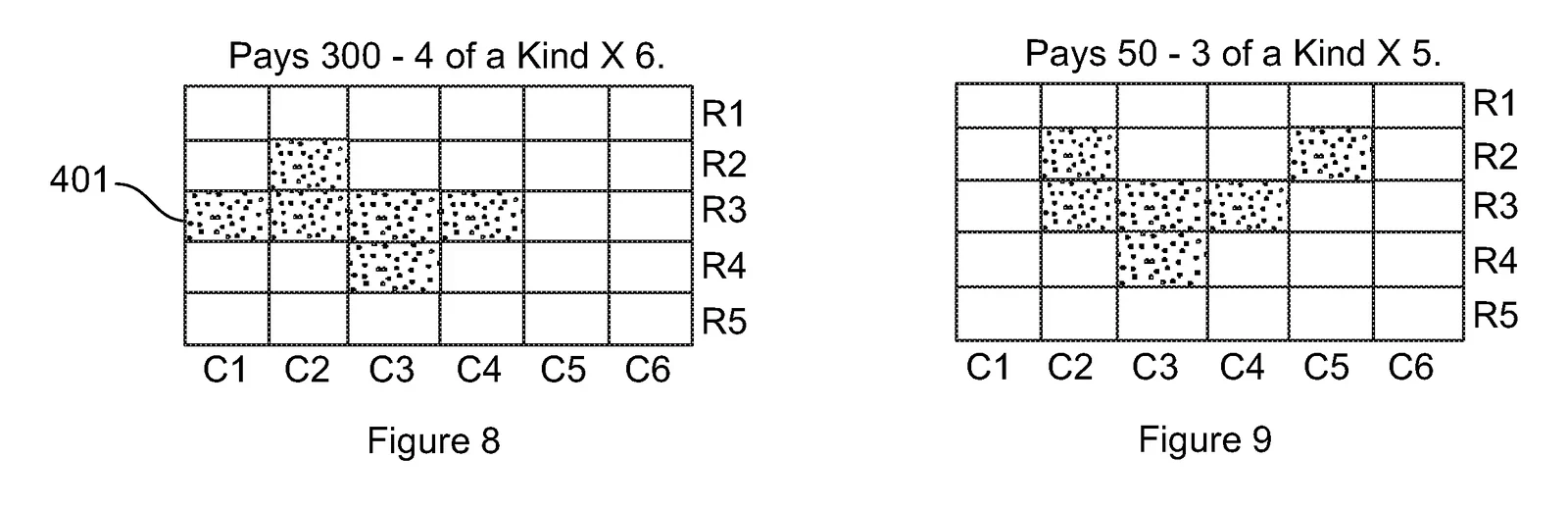
Aristocrat’s U.S. patent diagram is the clearest public example of this rule. The patent defines a cluster as ‘a group where each symbol touches at least one edge with another.’ In diagram 9, a 5-cell cluster spans columns C2-C4, and another matching symbol sits above in column C5. That symbol only corners the cluster, so it doesn’t count. To the player’s eye it looks almost attached, but the math excludes it.
Grid size sets the game’s rhythm
Las cuadrículas de los juegos de cluster son más variadas de lo que parece. Los tamaños representativos confirmados de información oficial son los siguientes.
- 5×3: casos donde solo se superpone la lógica de clúster en una pantalla estándar de 5 rodillos (Berryburst de NetEnt)
- 5×5: Wild Worlds de NetEnt, juego de cuadrícula temprana Chain Reactors
- 6×5: el primer juego de clúster de NetEnt, juegos de clúster de Hacksaw Gaming
- 6×6: el primer juego de clúster de Nolimit City
- 7×7: numerosos juegos de clúster representativos de Play’n GO y Pragmatic Play
- 8×8: Gems Bonanza de Pragmatic Play
- 9×9: serie Clusterbuster de Red Tiger
- Variable: Big Time Gaming Megaclusters (base 4×4 to 8×8, free spins 16×16)
Small grids limit cluster size because they hit the screen edge fast. Large grids have room for bigger clusters but risk more non-winning spins with scattered symbols. 7×7 is common because it’s the sweet spot between these two problems.
Origins - From grid games to the name ‘Cluster Pays’
Chain Reactors de 2004
Los juegos de grilla que combinan clústeres y cascadas ya existían a mediados de los años 2000. Big Time Gaming menciona en su página oficial que el género de clúster y reacción comenzó en 2004 con ‘Chain Reactors’. En la página de reglas de este juego que apareció en casinos en línea decía que ‘un clúster es de 5 o más símbolos iguales conectados horizontal o verticalmente’ y ‘los símbolos conectados diagonalmente no cuentan como ganancia’. Cuando desaparecen los símbolos ganadores, caen nuevos desde arriba y se repite hasta que no haya más ganancias. Es prácticamente la misma estructura que los slots de clúster actuales. Sin embargo, el desarrollador varía entre Cozy Games e IGT según la fuente.
Experimento de Play’n GO – De 3 en línea a grupos de 5
La raíz directa de los modernos slots de clúster en línea es Play’n GO. Energoonz, lanzado el 28 de noviembre de 2013, es el primer juego que Play’n GO identifica como parte de la serie Reactoonz. Sin embargo, según la descripción oficial, la condición de ganancia del juego base es ‘3 o más símbolos en línea horizontal o vertical’. Era más parecido a un puzzle Match3 que a un grupo, y en el juego de bonificación usaba un sistema donde 5 o más símbolos en cualquier lugar de la grilla ganaban. Cada vez que las cascadas continuaban, el multiplicador aumentaba, y también había una regla que pagaba 1,000x la apuesta cuando se limpiaba completamente la grilla.
Today’s complete cluster rules emerged December 1, 2014 with Gemix. Play’n GO’s official description calls Gemix a cascading slot on a 7×7 grid, with wins defined as ‘5 or more matching symbols touching horizontally or vertically’. Winning symbols vanish and new symbols fall until no more wins are possible. Over a year before NetEnt.
Same-period patent - Aristocrat
Offline slot manufacturers were also researching cluster payouts. Aristocrat Technologies Australia’s U.S. Patent 10,964,173 ‘Game methods and apparatus using cluster-based wins’ has a priority date of September 29, 2014, was filed September 29, 2015, and registered March 30, 2021. This patent’s math differs slightly from online cluster slots. A cluster must span at least 2 columns, and payout is ‘base payout (by number of columns spanned) × cell count’. The patent text indicates no minimum cell requirement, so even 2-cell clusters are possible.
The name NetEnt gave it - Cluster Pays™
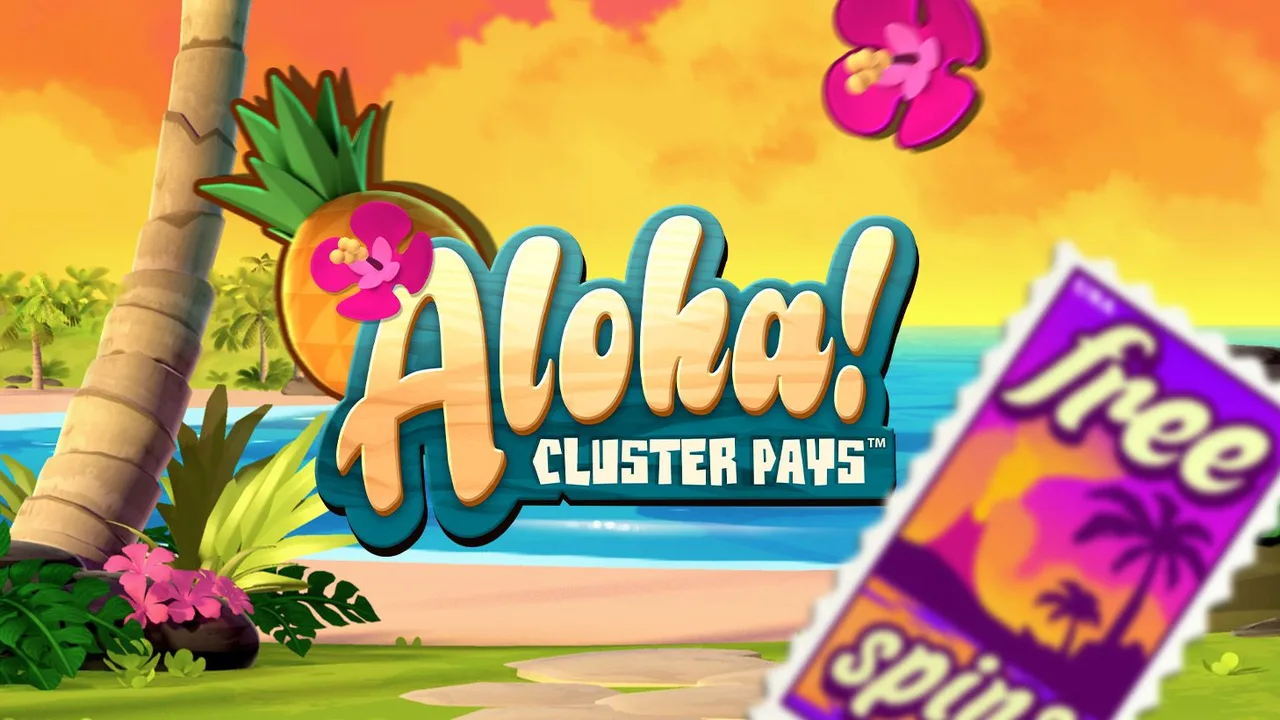
NetEnt estableció ‘Cluster Pays’ como un término estándar de la industria. Según la información oficial del juego de NetEnt, la fecha de lanzamiento de Aloha! Cluster Pays es el 22 de marzo de 2016. Al día siguiente, iNTERGAME reportó este juego como el primero de NetEnt en usar la nueva mecánica Cluster Pays. NetEnt todavía usa el símbolo de marca registrada como Cluster Pays™ en su página oficial.
So the question ‘which was the first cluster slot?’ has two answers. By name and trademark, NetEnt was first in March 2016. By rules, Gemix came first in December 2014, or going back further, Chain Reactors in 2004. Some review sites call NetEnt ‘first’ because they’re using a name-based standard.
Expansión – Cómo cada proveedor adoptó los clústeres
Megaways spread through Big Time Gaming’s license, but no record exists of Cluster Pays spreading by license agreement. Other providers also use ‘Cluster Pays’ or ‘Cluster Payout’ as general terms, each adding their own unique branded mechanics.
NetEnt launched The Legend of Shangri-La on September 21, 2017 as ‘the next adventure in the Cluster Pays series’, followed by Berryburst on August 23, 2018 (5×3 screen) and Wild Worlds on April 9, 2019 (5×5 screen). Play’n GO popularized clusters with Reactoonz on October 23, 2017.
Pragmatic Play se incorporó formalmente en mayo de 2020 con Fruit Party de 7×7, y en junio de 2022 añadió un nuevo mecanismo llamado “posición de multiplicador” con Sugar Rush. En junio de ese mismo año, Big Time Gaming presentó un nuevo formato llamado “Megacluster” con su primer juego de grilla Star Clusters Megaclusters. Red Tiger lanzó Dragons Clusterbuster con una grilla de 9×9 el 3 de marzo de 2022, y Nolimit City usó clúster pays por primera vez el 13 de septiembre de 2022 con The Border. Hacksaw Gaming lanzó Le Bandit con una grilla de 6×5 el 6 de agosto de 2023.
Timeline view
- 2004: Chain Reactors, juego de cuadrícula temprana con clústeres de 5 o más de izquierda a derecha y hacia arriba/abajo y cascadas (según la descripción de Big Time Gaming)
- Noviembre de 2013: Energoonz de Play’n GO, juego de cascada de cuadrícula (el juego base usa el método de 3 en línea)
- Septiembre de 2014: Aristocrat – fecha de prioridad de la patente de Cluster Payout (registro estadounidense en marzo de 2021)
- Diciembre de 2014: Gemix de Play’n GO, cuadrícula 7×7 con clústeres de 5 o más y cascadas
- Marzo de 2016: Aloha! Cluster Pays de NetEnt, aparece el nombre ‘Cluster Pays™’
- Octubre de 2017: Reactoonz de Play’n GO, cascada de clúster 7×7 se populariza
- Mayo de 2020: Fruit Party de Pragmatic Play, clúster 7×7 con multiplicadores
- Junio de 2020: Star Cluster de Big Time Gaming, formato megaclúster
- Marzo de 2022: Dragons Clusterbuster de Red Tiger, cuadrícula 9×9 y bloques bloqueados
- Junio de 2022: Sugar Rush de Pragmatic Play, función de multiplicador de posiciones
- Septiembre de 2022: The Border de Nolimit City, primer juego de clúster de la compañía
- Agosto de 2023: Le Bandit de Hacksaw Gaming
- Marzo de 2024: Sugar Rush 1000 de Pragmatic Play, límite superior de multiplicador de posición a 1,024x
Why do clusters always come with cascades?
Hay una razón estructural por la que la mayoría de las tragamonedas de cluster usan cascadas.
Primero, los clusters son difíciles de formar. En tragamonedas de línea de pago, solo necesitas 3 símbolos seguidos en una línea definida, pero en clusters necesitas 5 o más símbolos iguales conectados sin interrupciones. Es raro que un cluster se complete en una sola caída de símbolos en una cuadrícula aleatoria. Las cascadas multiplican las oportunidades de formar clusters al rellenar la cuadrícula varias veces dentro de una sola apuesta.
Second, the target is clear. In payline games using cascades, you must decide which symbols to remove, but in clusters the winning cluster itself shows what clears. When the cluster disappears, symbols above fall down, and remaining symbols can connect to form the next cluster.
Third, cascades become the stage for multiplier mechanics. Sugar Rush marks positions where winning symbols cleared, and if the same position clears again in the same spin, a 2x multiplier attaches, then doubles each time-2x, 4x, 8x. After seven doublings to the official cap of 128x, it stops. Without cascades, the same position would never clear twice.
There are exceptions. Aloha! Cluster Pays uses ‘Sticky Win Respin’ instead of cascades. When a cluster wins, this feature randomly activates, locking winning symbols and respinning the rest. As the cluster grows, those cells lock too and respin again. It ends when the cluster stops growing or fills the screen. Both methods give clusters a ‘second chance’-just using different mechanics.
Major titles analyzed
NetEnt’s first cluster - 6×5 and 9-symbol standard
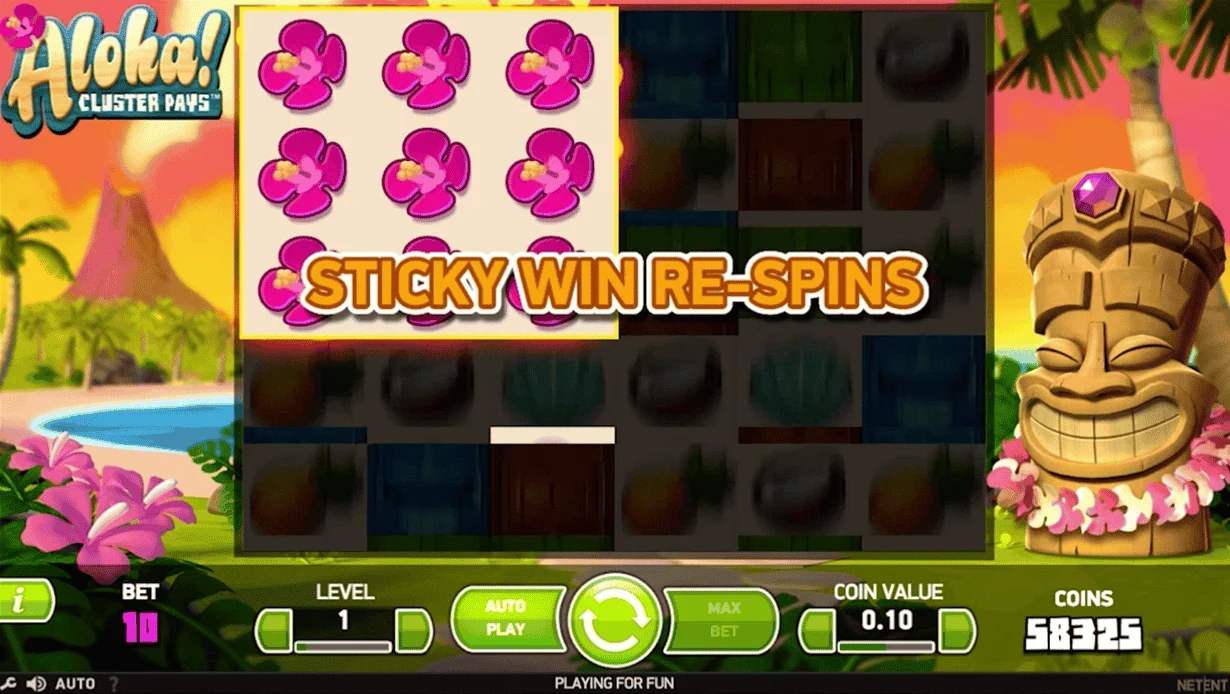
Aloha! Cluster Pays is a 6×5 screen. By NetEnt’s official info, RTP is 96.42%, hit frequency is 21%, and max win is 700x the bet. Review sites explain that 9 or more of the same symbol must connect. On a 30-cell screen, 9 is a high threshold. Instead, Sticky Win Respin and a wild symbol grow the clusters. Free spins trigger on 3-6 free spin symbols for 9-12 spins; during free spins, a ‘symbol drop’ removes lower-paying symbols.
Cuadrícula 7×7 de alienígenas – función de apilamiento de medidor
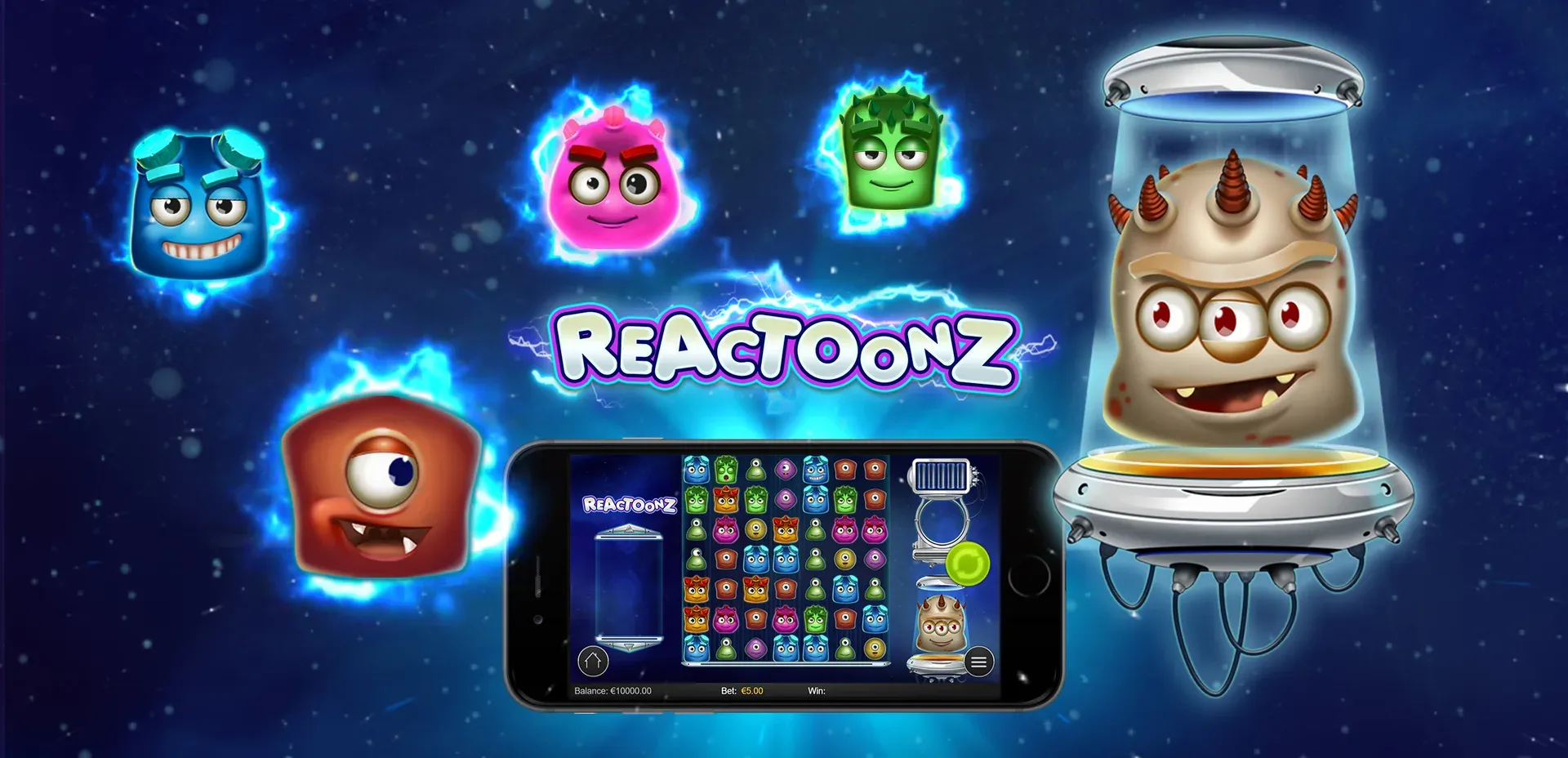
Reactoonz triggers a win when 5 or more identical aliens connect on a 7×7 grid. Winning aliens disappear and new ones fall from above. According to Play’n GO’s official description, each winning cluster feeds energy to the giant alien Gargantoon in the grid’s center. When the meter fills, Gargantoon leaps in and triggers up to five features in a row. Cascades and cluster count themselves become ‘resources’. Industry data puts max win at 4,570x.
Multiplier positions in the candy grid
Sugar Rush is a 7×7 cluster game Pragmatic Play released June 30, 2022. By Pragmatic’s description, clusters of 5-15+ symbols pay up to 150x in the base game, with the multiplier position feature attached. Getting 3, 4, 5, 6, or 7 scatters awards 10, 12, 15, 20, or 30 free spins respectively; marked positions and multipliers hold throughout the round. Official RTP is 96.50%; industry data puts max win at 5,000x. Sugar Rush 1000, released March 2024, uses the same structure but raises the multiplier cap to 1,024x.
Nolimit City-style clusters - xCluster
The Border uses a 6×6 grid where 5 or more symbols matching horizontally or vertically win. By Nolimit City’s official info, release date is September 13, 2022, RTP is 96.17%, hit frequency is 29.58%, and max win is 44,288x the bet. On top of cascades where new symbols fall into cleared spaces, the xBomb wild destroys surrounding symbols and raises the next cascade’s multiplier-Nolimit City’s x-mechanics applied. They even created a dedicated xCluster device for this.
Clusters split in Megaclusters
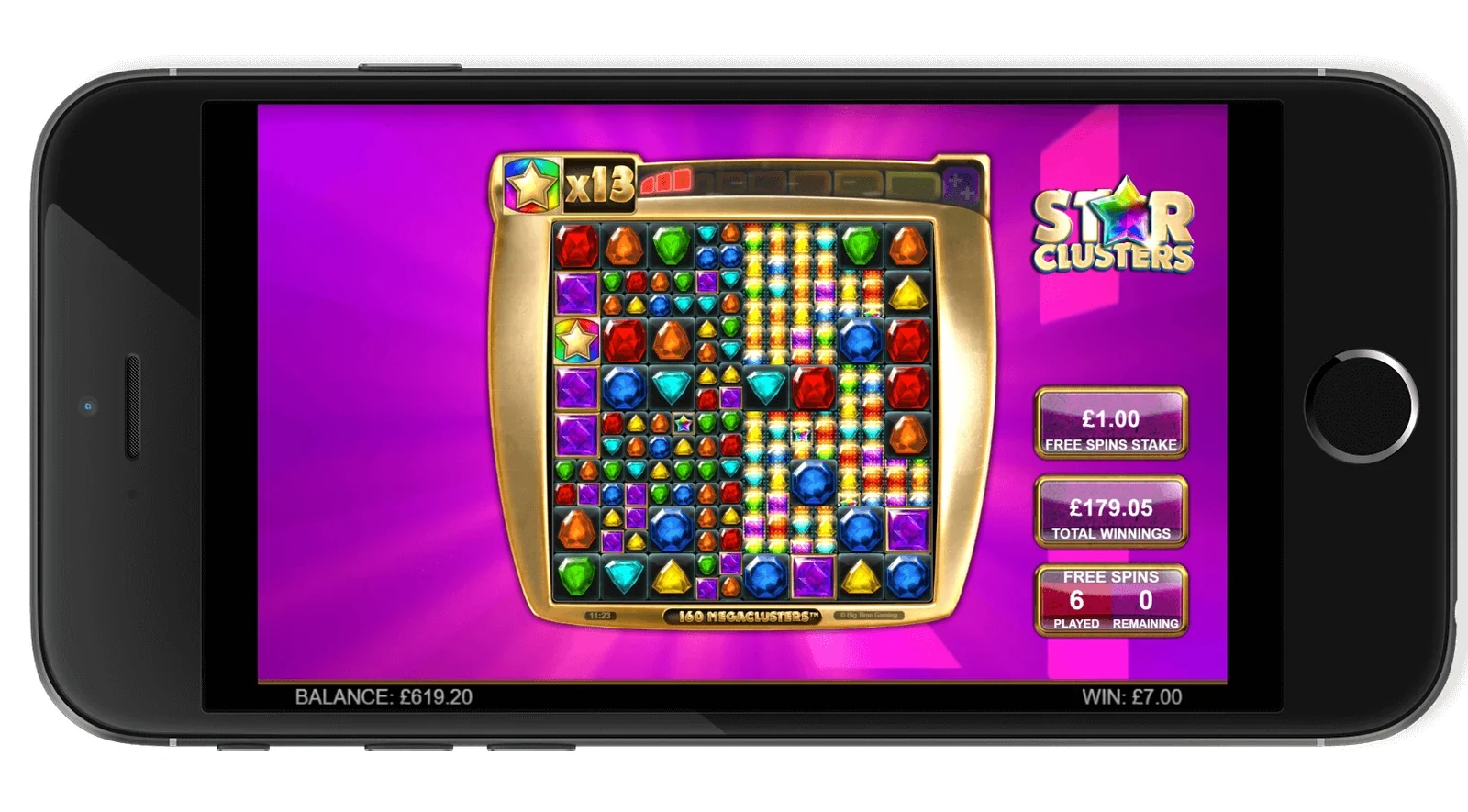
Star Clusters Megaclusters chooses to ‘split’ clusters instead of growing them. By Big Time Gaming’s official description, Megaclusters split winning symbols to create new ones, with the grid expanding from 4×4 in the base game to 8×8 and up to 16×16 in free spins-up to 256 symbols on screen. Official RTP is 96.54%. True to form for the Megaways creator, they adapted the ‘changing grid size’ concept to clusters.
Huevos bloqueados en el centro de la cuadrícula 9×9
Dragons Clusterbuster has a 3×3 locked ‘dragon egg’ in the center of a 9×9 grid. Red Tiger calls this a Clusterbuster. Each time a winning cluster forms next to the egg, the egg’s outer cells break. When all break, a hidden feature opens. By Red Tiger’s official info, release date is March 3, 2022, RTP is 95.78%, hit frequency is 35.04%, and max win is 7,931x.
How providers interpret clusters differently
Even though they’re called ‘clusters’, each provider emphasizes something different.
- NetEnt: Early method that builds clusters through respins instead of cascades, with high minimum cluster size
- Play’n GO: Línea de ‘juegos de grilla’ que combina cascadas, medidores y efectos de transformación de grilla
- Pragmatic Play: Fórmula que añade multiplicadores (multiplicadores aleatorios, posiciones de multiplicador) a una grilla estándar de 7×7
- Big Time Gaming: Growing the grid itself by splitting winning symbols into Megaclusters
- Red Tiger: Breaking locked clusters to unlock features with Clusterbuster
- Nolimit City: Stacking xBomb and xCluster mechanics on top of cascades
- Hacksaw Gaming: Método que marca celdas ganadoras en una grilla de 6×5 y luego las convierte en recompensas
- Aristocrat patent: Payout variation based on the number of columns spanned by a cluster
El tamaño mínimo tampoco es uniforme. Reactoonz, Sugar Rush y The Border usan 5 símbolos; Candy Jar Clusters de Pragmatic Play usa 6 según especificaciones oficiales; Aloha! Cluster Pays usa 9 según reseñas. Por eso es importante verificar en la pantalla de información del juego ‘cuántos símbolos se necesitan para ganar’. Las razones detrás de los diferentes nombres de funciones por proveedor están detalladas en la sección mecanismos propios del proveedor del wiki.
Cluster según los datos de AI Slot
Mirando los juegos de clúster registrados en AI Slot por proveedor, Play’n GO y Pragmatic Play tienen la mayoría, seguidos por ELK Studios, PG Soft, Hacksaw Gaming e Yggdrasil. La función más común que aparece junto es tumble, seguida de giros gratis y multiplicadores. La explicación anterior de que cluster y cascada van juntos se refleja directamente en los datos. Entre los juegos con tamaño de cuadrícula fijo, 7×7 es el más común. Mirando por año de lanzamiento, los nuevos juegos de clúster aumentaron significativamente después de 2020.
Cosas a tener en cuenta al leer información de juegos de cluster.
Hit frequency is measured per ‘spin’
Dragons Clusterbuster’s official hit frequency is 35.04%; Aloha! Cluster Pays is 21%. These numbers usually mean the percentage of spins where at least one win occurred. A cascade producing five clusters counts as one spin. Frequent screen hits don’t mean bigger actual returns. For the exact meaning of hit frequency, see the hit rate entry on our wiki.
La ganancia máxima entre juegos antiguos y nuevos es difícil de comparar.
NetEnt’s early cluster games had official max wins of 600x-1,300x. By contrast, 2020s games reach 5,000x to over 40,000x. The cluster method itself didn’t change; multiplier mechanics and volatility design did. Don’t generalize cluster games based on numbers alone as ‘big payouts’ or ‘small payouts’.
Hay múltiples versiones de RTP
La página oficial de Hacksaw Gaming enumera el RTP de Le Bandit como cuatro opciones: 96.34%, 94.23%, 92.17% y 88.36%. Los juegos de Play’n GO y Pragmatic Play también se distribuyen en diferentes versiones de RTP según el operador. Incluso el mismo juego puede tener diferentes RTP según dónde accedas, así que es importante desarrollar el hábito de verificar los valores reales en la pantalla de información dentro del juego.
Watch out for diagonal illusions
La pantalla de clúster tiene símbolos densamente empaquetados, y los símbolos conectados diagonalmente pueden parecer un grupo. Sin embargo, casi todos los juegos solo reconocen conexiones horizontales y verticales. Al probar la demo, primero observa qué celdas resalta el marcador de ganancias, cuántos símbolos mínimos se necesitan para ganar, y cómo cambian los multiplicadores o medidores después de las cascadas.
FAQPreguntas frecuentes
¿Cuál es la diferencia entre Cluster Pays y Scatter Pays?
Scatter pays (pays anywhere) trigger when the same symbol reaches the required count anywhere on screen. Cluster pays require the same symbol to connect horizontally or vertically. Even with the same 8 symbols, scattered ones win on scatter pays but may not on cluster pays.
¿Cuál fue la primera tragamonedas de cluster pays?
El nombre ‘Cluster Pays’ fue usado por primera vez por NetEnt en su juego Aloha en marzo de 2016. Sin embargo, juegos con la misma regla existían antes. Gemix de Play’n GO usó una cuadrícula 7×7 y clústeres de 5 o más en diciembre de 2014, y Big Time Gaming considera que Chain Reactors de 2004 fue el inicio del género.
Do diagonally-adjacent symbols count as a cluster?
In most games, they don’t. Only symbols touching edge-to-edge (up, down, left, right) count as connected. Chain Reactors, an early grid game, also states in its rules that diagonal connections don’t count as wins.
¿A partir de cuántos símbolos se forma un clúster ganador?
5 es el más común. Sin embargo, hay juegos que requieren 6, y juegos como Aloha de NetEnt en una pantalla 6×5 que requieren 9 o más. Simplemente verifica el tamaño de clúster más pequeño en la tabla de pagos dentro del juego.
¿Todos los juegos de cluster tienen cascadas?
Most use cascades, but not all. NetEnt’s early cluster games used respins instead-locking winning symbols and respinning the rest. Whether cascades or respins, both give clusters a second chance.
Does a bigger grid mean more wins?
Not necessarily. More cells create space for clusters, but providers balance the math by adjusting symbol types, rates, and minimum size. The real hit frequency and RTP are best confirmed in official game info.
Artículos relacionados que vale la pena leer
El historial de la función de cascada, que funciona al unísono con los clústeres, está en la guía ‘Análisis completo: Tumble‘, y el proceso de nacimiento de otro mecanismo cuyo tamaño de grilla cambia en cada giro está en la guía ‘Análisis completo: Megaways’. Si quieres verificar las reglas de clúster directamente, abre primero demos de Reactoonz o Sugar Rush con grillas de 7×7, y también está bien compararlas lado a lado con Gemix y Energoonz, los juegos originales. Las características individuales de cada proveedor se hacen evidentes al jugar secuencialmente Fruit Party, The Border, Star Clusters Megaclusters, Dragons Clusterbuster y Le Bandit.
Fuentes: información oficial de NetEnt (games.netent.com), página oficial de Play’n GO (playngo.com), página oficial de Pragmatic Play (pragmaticplay.com), información oficial de Nolimit City (nolimitcity.com), información oficial de Red Tiger (redtiger.com), página oficial de Big Time Gaming (bigtimegaming.com), página oficial de Hacksaw Gaming (hacksawgaming.com), patente estadounidense US 10,964,173 B2 (Aristocrat), iNTERGAME (2016.3.23), iGaming Business (2016.3.29), Yogonet (2022.6.30), World Casino Directory, página de reglas de juegos de casino de Gamebookers, OLBG