


Complete Analysis of Slot Multipliers – From Double Wilds to Unlimited Multipliers
Even three 3x multipliers give 9x when added and 27x when multiplied. We follow the evolution and math of slot multipliers, from the double wild of 1989 through multiplier symbols, cell multipliers, xNudge and unlimited accumulating multipliers, using real numbers from landmark games.

Key takeaways
- Multipliers differ in four ways: where they attach, when they grow, whether they add or multiply when they overlap, and when they reset.
- It started from the double wild of IGT’s Double Diamond in 1989 and evolved through fixed free spin multipliers, cascading ladders, multiplier symbols, cell multipliers and moving multipliers like xNudge.
- Gates of Olympus, Sugar Rush and xNudge add multipliers, while Chaos Crew multiplies them. Even on the same screen, the way they are combined can change the result several times over.
- A multiplier is not a device that raises RTP but one that concentrates returns into rare moments, and even with an unlimited multiplier there is a separate max win cap.
A slot multiplier is a device that multiplies a win by a set number to increase the payout, and it can attach to many places, such as wilds, special symbols, specific cells on the screen, or the entire free spins round. Even for the same “3x”, the character of the game changes completely depending on where it attaches, when it grows, and whether multiple multipliers add or multiply when they meet.
This article is an in-depth guide to how multipliers have branched out, from the “double wild” of late-1980s offline slots to fixed free spins multipliers, cascade ladders, falling multiplier symbols, cell-engraved multipliers, and multipliers that grow through movement. It follows how representative games actually calculate multipliers with real numbers, and also covers how multipliers create volatility and what to look for when reading game info. If you just want to check the terminology quickly, you can first read the wiki entry covering the basic concept of the multiplier.
Four questions for reading a multiplier
There are so many types of multipliers that names alone make them hard to tell apart. Instead, you can break any multiplier down with the four questions below to reveal its character.
- Where it attaches: a wild symbol, a separate multiplier symbol, a specific cell on the screen, an entire reel, or the whole round (global multiplier)
- When it grows: is it a fixed value, or does it rise whenever an event like a cascade, wild, or movement occurs?
- How they combine: when two or more multipliers overlap, are they added or multiplied?
- When it disappears: how long does it last, from a single win to one spin to the whole free spins round?
For example, a setup where every win is doubled throughout the free spins is a multiplier that “attaches to the whole round, is a fixed value, and disappears at the end of the round.” By contrast, Nolimit City’s xNudge wild is a multiplier that “attaches to a wild, grows as the wild is nudged along, and adds up when they meet on the same line.” Every game in this article can be sorted into these four boxes.
Add or Multiply - Same Multipliers, Different Results
With a single multiplier, the math is simple. If a 2x-bet line win includes a 3x wild, it becomes 6x. The trouble starts when several multipliers overlap. Let’s assume three 3x wilds land on the same payline.
- Adding: 3 + 3 + 3 = 9x. Line win 2x × 9 = 18x the bet
- Multiplying: 3 × 3 × 3 = 27x. Line win 2x × 27 = 54x the bet
The screen looks the same, but the result differs threefold. The more multipliers overlap, the more the gap widens exponentially. With five 3x multipliers, addition gives 15x and multiplication gives 243x. So in games using multiplication, the same multiplier value has a much wider payoff when it hits, and in exchange it is designed to hit that much more rarely.
Actual games also split into two approaches. In IGT’s 1989 Double Diamond, one diamond symbol doubles a win and two make it four times. That is 2 × 2, in other words multiplication. By contrast, in Pragmatic Play’s 2019 The Dog House, when several 2x and 3x wilds land on the same win, their values are added. Even within the same developer, the approach differs. In Hacksaw Gaming’s Chaos Crew, multiplier wilds on the same payline multiply each other, but in the same company’s Wanted Dead Or a Wild, the multipliers across several reels are summed and then applied to the win. In a game’s rules, if you see “added,” “combined,” or “totaled,” it means addition; if you see “multiply each other,” it means multiplication.
The evolution of multipliers on a timeline
- 1989: IGT Double Diamond, where the diamond symbol substitutes for other symbols and doubles wins (4x with two)
- November 2009: NetEnt Dead or Alive, with all line wins fixed at 2x during free spins
- March 2010: NetEnt Gonzo’s Quest, a multiplier ladder that climbs with each cascade
- December 2016: Big Time Gaming Bonanza, with an uncapped multiplier that rises by 1 with every free spin cascade
- July 2018: Nolimit City Hot Nudge, the first appearance of a nudging wild that grows the multiplier as it moves
- April 2019: NetEnt Dead or Alive 2, with a fixed multiplier, a wild multiplier and an accumulating gauge multiplier all in one game
- May 2019: Nolimit City Tombstone, officially branded under the “xNudge” trademark
- May 2019: Pragmatic Play The Dog House, with additive 2x and 3x wilds
- May 2020: Nolimit City Deadwood, combining xNudge with an unlimited accumulating multiplier in free spins
- September 2020: Hacksaw Gaming Chaos Crew, where multipliers on the same payline multiply each other
- December 2020: Pragmatic Play Big Bass Bonanza, a stepped multiplier that rises to 2x, 3x and 10x with each retrigger
- February 2021: Pragmatic Play Gates of Olympus, with multiplier symbols up to 500x and a total multiplier in free spins
- September 2021: Hacksaw Gaming Wanted Dead Or a Wild, with DuelReels multipliers from 2x to 100x
- January 2022: Nolimit City Tombstone R.I.P., with a max win of 300,000x
- June 2022: Pragmatic Play Sugar Rush, with multipliers marked on cells that double each time (up to 128x)
- December 2023: Pragmatic Play Gates of Olympus 1000, raising the multiplier symbol cap to 1,000x
Generation 1 - When a wild made it double
The starting point of multipliers is the offline slot machine. According to IGT materials, Double Diamond first appeared in 1989. A Double Diamond symbol pairs with other symbols on the payline to double that win, and two of them make it four times. The idea of “a wild that is also a multiplier” was already complete back then.
When the format moved to online video slots, the most common form was the “fixed free spins multiplier.” NetEnt’s original Dead or Alive, released on November 10, 2009, is a good example. Three or more scatters award 12 free spins, during which every line win is doubled. On top of that comes the sticky wild, where a wild that lands once stays until the end. The multiplier itself is a simple 2x, but when 2x applies on a screen full of accumulated sticky wilds, the effect is large.
Official NetEnt materials state that of this game’s 96.82% RTP, 71.16% comes from the base game and 25.65% from the bonus. This means about a quarter of the total return is concentrated in the free spins with the 2x multiplier. These numbers show well that even a fixed multiplier raises volatility when it is “applied in a lump to a rarely reached phase.”
Generation 2 - Multipliers that rise with every event
In the 2010s, multipliers moved away from fixed values to a system that “steps up one level each time a condition is met.” The cascade multiplier ladder in Gonzo’s Quest and the uncapped reaction multiplier in Bonanza are the best-known examples. The cascade multipliers of these two games are covered in detail in our Complete Tumble Analysis guide, so we only touch on the key points here.
- Ladder type: it rises through fixed steps (1x, 2x, 3x, 5x in the Gonzo’s Quest base game) and then stops. If the cascade chain breaks, it returns to the start.
- Unlimited growth type: like the Bonanza free spins, it rises by 1 with each cascade and has no upper limit.
Even among “stepped” multipliers, what triggers the rise differs from game to game. Big Bass Bonanza, unveiled on December 14, 2020, adds 10 spins each time you collect 4 fisherman wilds during free spins, and the multiplier rises to 2x, 3x and 10x. It is a structure where “collecting,” not cascading, pushes the multiplier up. This way of linking events to multipliers later became the basic grammar of almost every multiplier design.
Generation 3 - Multiplier symbols that fall onto the screen
When Sweet Bonanza put multiplier bombs into free spins in June 2019, multipliers became their own “separate symbol,” independent of wilds. The game that extended this approach to the base game and added the idea of a round-long running total is Gates of Olympus, released on February 25, 2021.
How Gates of Olympus Calculates Multipliers
On a 6-reel, 5-row screen, 8 or more matching symbols win anywhere, and winning symbols disappear with a tumble. Winged gem-shaped multiplier symbols then fall with values from 2x up to 500x. According to the official Pragmatic Play description, the calculation rules are as follows.
- Base game: when a tumble chain ends, all multiplier values on screen are added together and applied to that spin’s win.
- Free spins (4 or more scatters, 15 spins): if a multiplier symbol drops on a spin with a win, its value is added to the round’s total multiplier, and the accumulated total multiplier is applied to that win. The total multiplier does not decrease until the round ends.
- Three scatters during free spins award 5 extra spins.
Let’s follow it with numbers. If a 10x symbol drops along with a 1.5x-bet win on the 3rd free spin, the total multiplier becomes 10x and the payout is 15x. If 5x and 25x symbols drop along with a 2x-bet win on the 7th spin, the total multiplier grows to 10 + 5 + 25 = 40x and the payout is 80x. The catch is that the total multiplier does not apply on a spin where a win lands without a multiplier symbol. So even if a large total multiplier has built up late in the round, it only takes effect when a multiplier symbol and a win land on the same spin.
The official RTP is 96.50%, and the max win is known to be 5,000x the bet. Individual multiplier symbols can reach 500x, but actual payouts stop at this cap. Keep in mind that the multiplier cap and the max win limit are two different things.
1000 version – Raising the multiplier cap
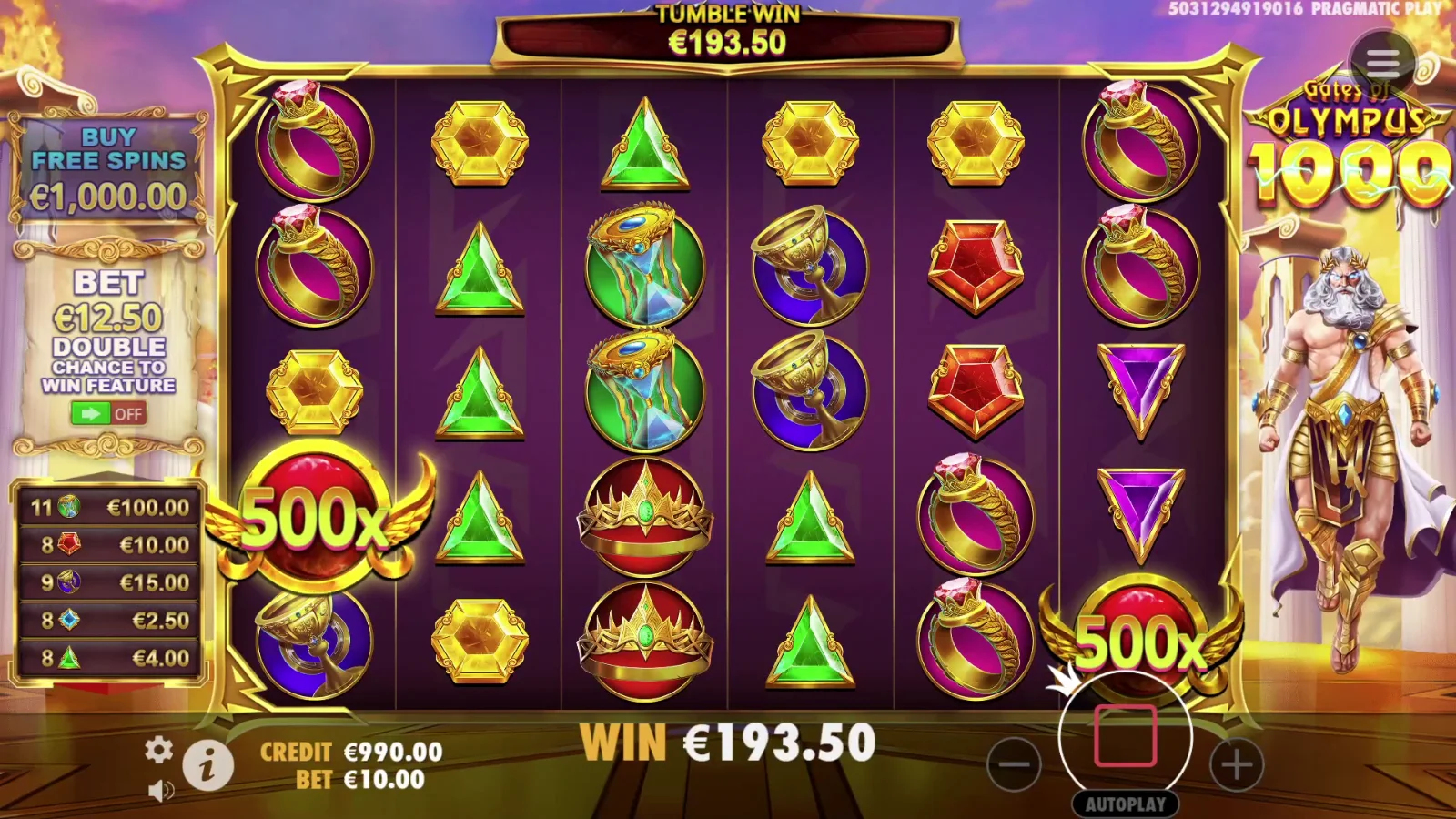
Gates of Olympus 1000, unveiled on December 14, 2023, widened the multiplier symbol range to 2x-1,000x under the same rules, with a max win announced at 15,000x. This approach of raising “only the multiplier numbers” while leaving the screen layout and free spin rules unchanged later grew into Pragmatic Play’s 1000 series. Raising the multiplier cap increases the top win potential, but the odds are adjusted so that large values appear rarely, which makes perceived volatility higher.
Generation 4 - Multipliers marked on cells, Sugar Rush
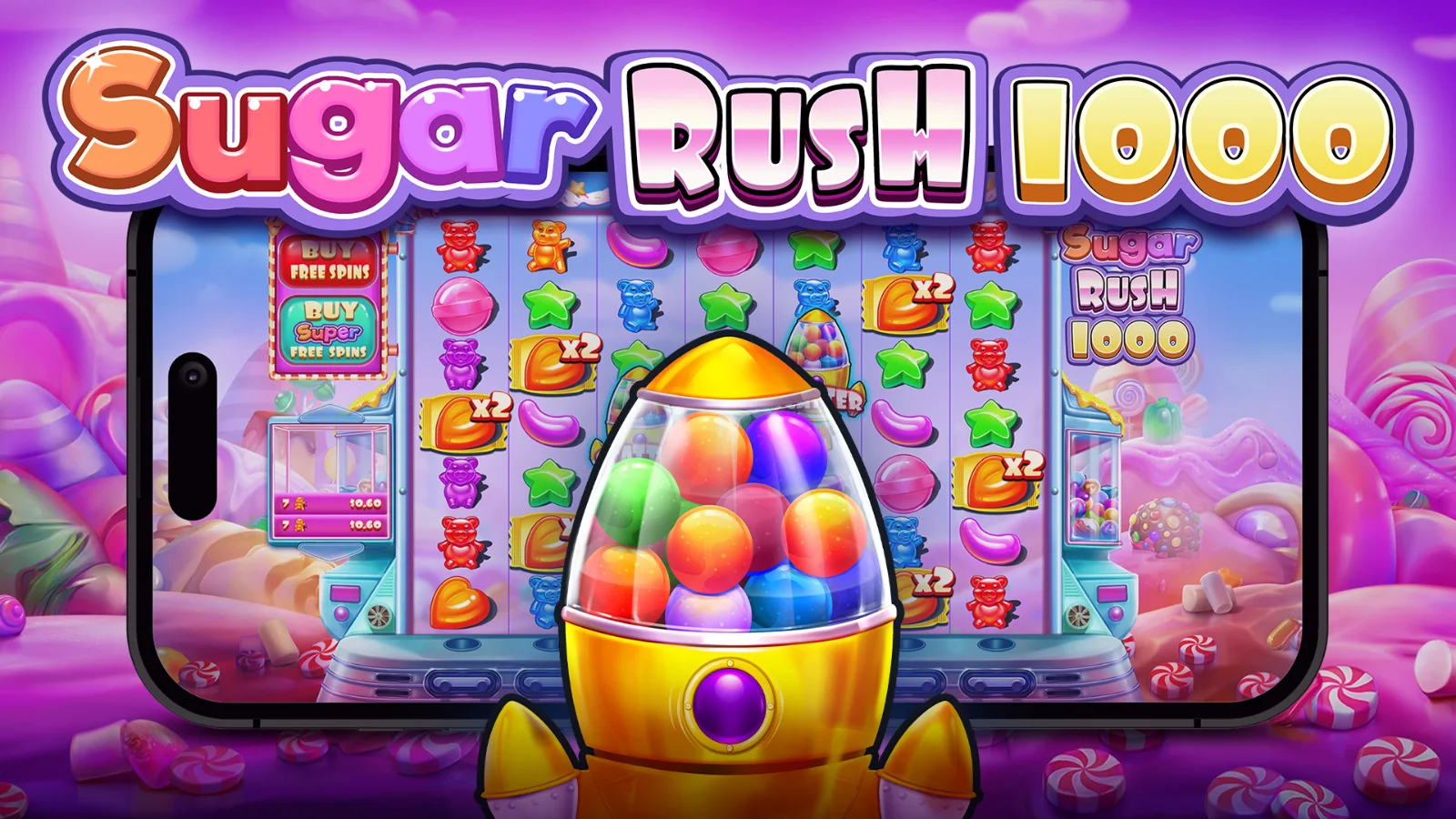
Sugar Rush, released on June 30, 2022, attached multipliers not to symbols but to “cells on the screen.” It is a cluster pays game on a 7×7 grid where 5 or more matching symbols touching win.
- A mark remains where a winning symbol popped.
- If a winning symbol pops again on a marked spot within the same spin, 2x is added to that cell.
- After that, each time a win lands on that cell, the multiplier doubles: 2 → 4 → 8 → 16 → 32 → 64 → 128x
- If a winning cluster covers several multiplier cells, their values are added.
- In the base game, the marks disappear when the spin ends, but in free spins (10-30 spins with 3-7 scatters), the marks and multipliers stay for the entire round.
For example, if a cluster covering a 4x cell and an 8x cell at the same time during free spins earns 1x the bet, the multiplier 4 + 8 = 12x applies, making it 12x. Because the value doubles each time a win repeats on the same cell, scenes of high-multiplier cells clustering on one side of the screen are common late in free spins. Sugar Rush 1000, released in March 2024, raised the cell multiplier cap to 1,024x in the same structure.
Generation 5 - Movement becomes the multiplier, Nolimit City xNudge
Nolimit City tied multipliers to “the movement of wilds.” The starting point is Hot Nudge, released on July 26, 2018. The press release at launch described it as taking the nudge feature of classic slots to the next level, highlighting a wild that nudges in both directions to grow the multiplier.
The following year, in Tombstone, released on May 2, 2019, this feature was trademarked under the name “xNudge.” In its Tombstone launch materials, Nolimit City stated directly that Hot Nudge was the originator of this “nudge wild multiplier” feature.
How xNudge Is Calculated
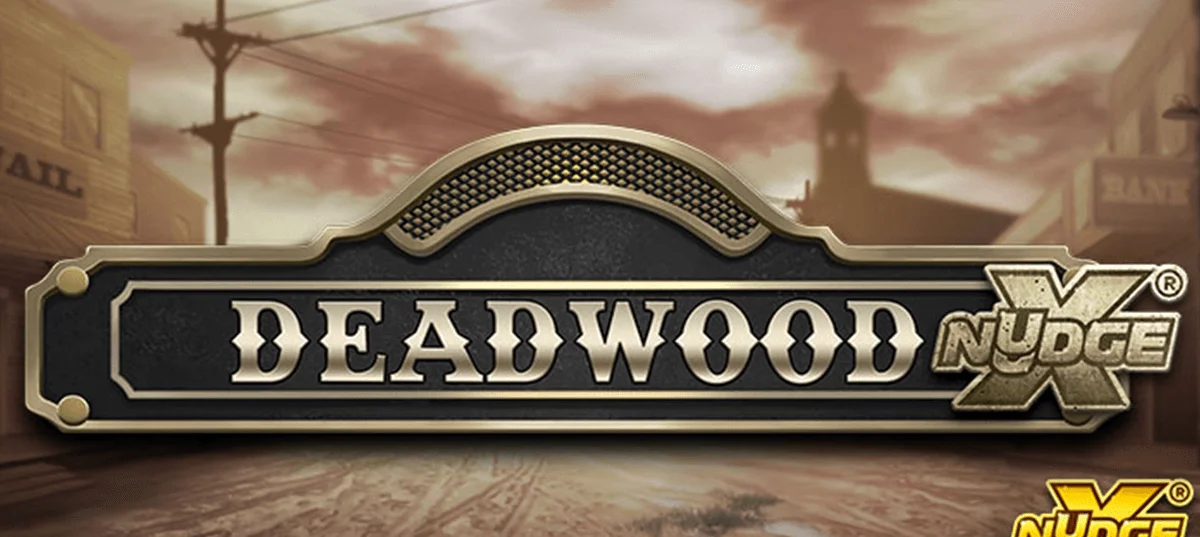
According to the official Nolimit City description, an xNudge wild is a tall wild that covers an entire reel. If only part of it appears on screen, it nudges up or down until it fills the reel, and each nudge raises the multiplier by 1. A wild that nudged in three spaces ends up 3 higher than when it started. When several xNudge wilds land on the same payline, their multipliers are added.
Deadwood xNudge, released on May 6, 2020, added a free spin choice to this. You pick between Hunter Spins, where wilds appear often but there is no accumulating multiplier, and Gunslinger Spins, where wilds are rarer but an unlimited accumulating multiplier that rises with each nudge stays for the entire round. By offering this choice, the design shows how much volatility changes depending on whether the multiplier “resets every spin or builds up throughout the round,” even within the same xNudge.
Tombstone R.I.P. – The End of Unlimited Multipliers
Tombstone R.I.P., released on January 11, 2022, layered other x mechanics such as xSplit on top of xNudge wilds and made the accumulating multiplier rise each time a wild lands in free spins. By Nolimit City’s official figures, the max win is 300,000x the bet, the odds of hitting it are about 1 in 130 million, and the hit frequency is 9.08%. Compared with Deadwood from the same provider at 40.17%, it shows how often a game with an extreme multiplier produces “empty spins.”
Hacksaw Gaming – Multiplying and Adding Multipliers
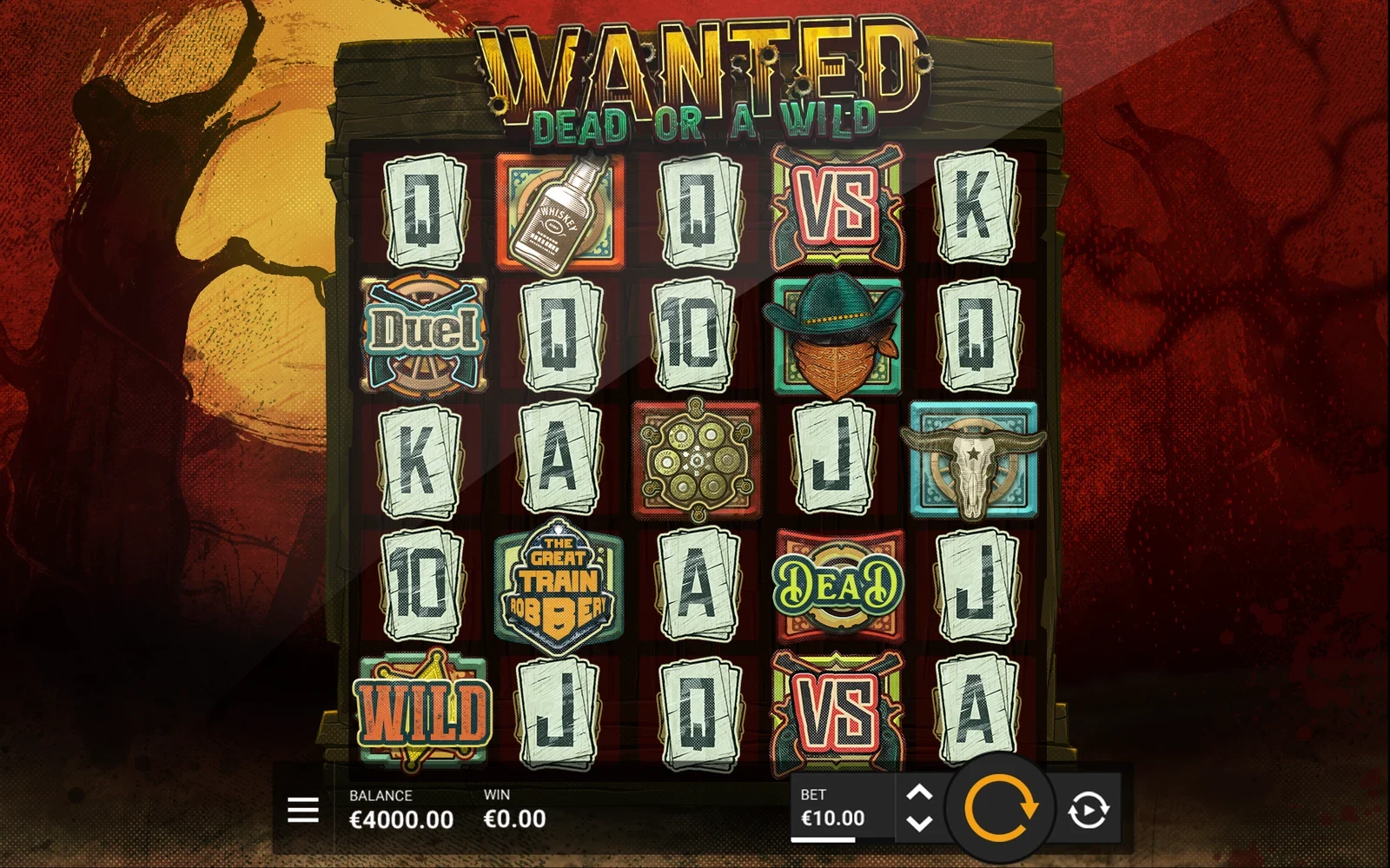
Hacksaw Gaming shows both summing approaches within the same company.
Chaos Crew, released in September 2020, multiplies a win when a Cranky Cat wild is part of it, and when several land on the same payline they multiply each other, according to the official description. It is a prime example of the multiplying approach. The official volatility is 5 out of 5, and the max win is 10,000x.
Wanted Dead Or a Wild, released on September 29, 2021, was the first game to introduce DuelReels, where the “VS” symbol expands across the entire reel. Two outlaws face off, and the winner’s multiplier is applied to the whole reel. The multiplier range is 2x to 100x, and when several duel reels are part of the same win, the multipliers are added together and then applied to the line win, according to the official description. The official RTP is 96.38% and the max win is 12,500x. One of the bonuses, Dead Man’s Hand, collects wilds and multipliers in the first stage and then applies the collected multiplier to all wins in the second stage, a structure that separates a “collecting phase” from a “spending phase.”
The history of multipliers in one game – Dead or Alive 2
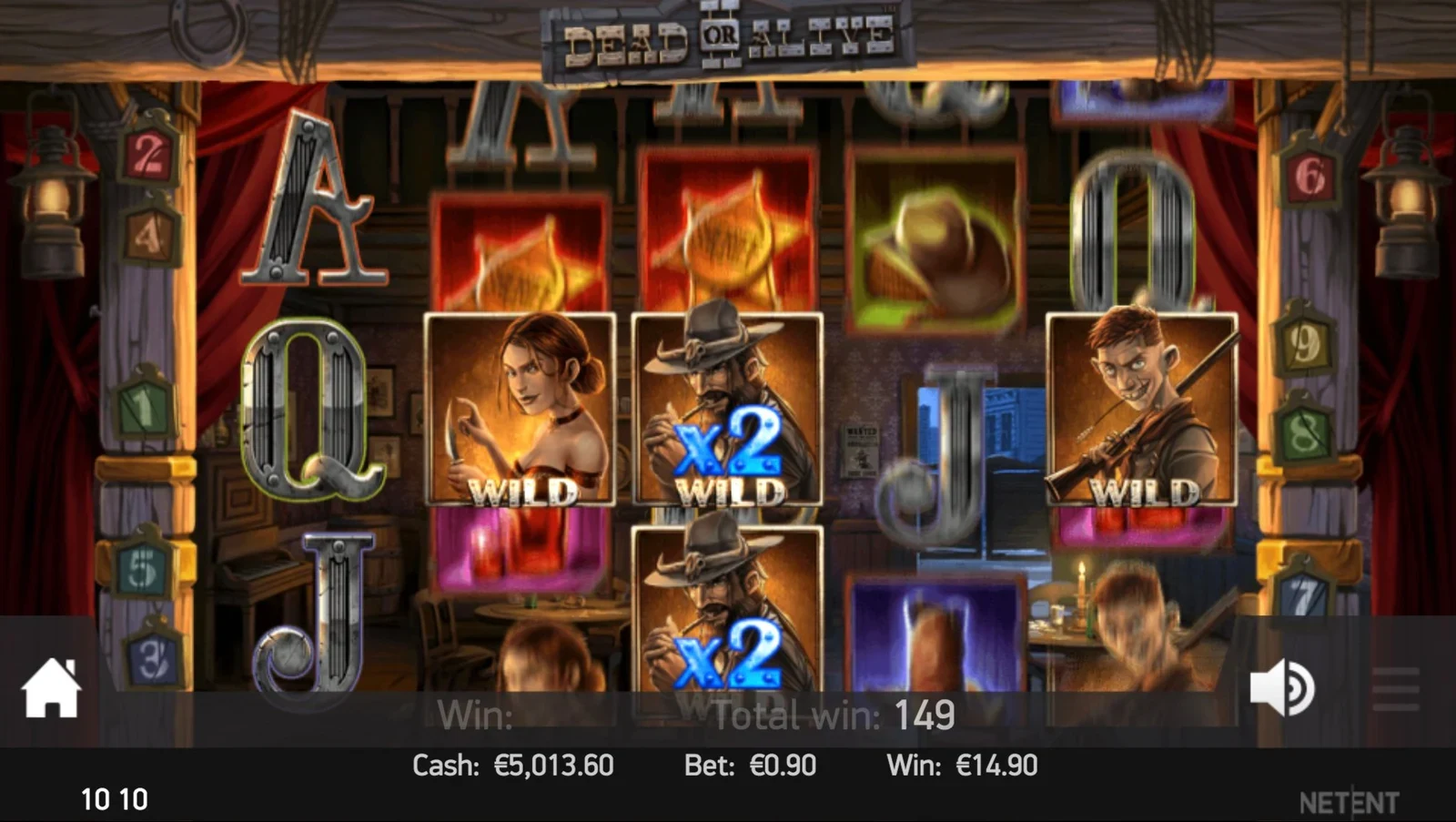
Dead or Alive 2, released on April 23, 2019, split the three forms of multipliers into three kinds of free spins. When 3 or more scatters land, you get 12 free spins and choose one of the three below.
- Old Saloon: every win fixed at 2x, with sticky wilds. It carries on the approach of the first game as is.
- High Noon Saloon: when 2 wilds land on the same reel they turn into a 2x wild, and when 3 land they turn into a 3x wild, staying sticky. This is the wild multiplier type.
- Train Heist: each time a wild lands, the multiplier gauge fills by one step, rising up to 16x, and reaching 16x awards 5 extra spins. It is a round-cumulative global multiplier.
Fixed, wild and accumulating multipliers sit side by side in one game, so you can compare directly how the range of results changes when only the multiplier structure changes within the same RTP. According to official NetEnt materials, the RTP is 96.8%.
Multiplier Tendencies by Provider
- Pragmatic Play: repeatedly uses falling multiplier symbols (Gates of Olympus family), cell multipliers (Sugar Rush family), and stepped free spins multipliers (Big Bass family) across series. Most use the “addition” approach. It also releases separate versions that raise only the multiplier cap as 1000 series.
- Nolimit City: puts multipliers inside x mechanics such as xNudge and xBomb. Even when multipliers do not show up in the name, most games have a multiplier element hidden inside, and max wins are extreme at tens or hundreds of thousands of times the bet.
- Hacksaw Gaming: favors multiplier wilds and duel-type multipliers, and uses both the multiplication approach (Chaos Crew) and the summing approach (Wanted Dead Or a Wild). Many of its bonuses are split into stages, collecting multipliers and then spending them.
- NetEnt: has long used relatively predictable multipliers such as fixed free spin multipliers and cascade ladders.
- Big Time Gaming: the originator of the approach that combined a no-cap multiplier rising by 1 with each cascade with Megaways.
Multipliers in AI Slot Data
Games per provider
Top 5 games by max win
- Peking Luck - Pragmatic Play, Max 180,000x, RTP 96.5%
- Max Megaways 2 - Big Time Gaming, Max 147,620x, RTP 96.64%
- Max Megaways 3 - Big Time Gaming, Max 101,830x, RTP 96.36%
- Mahjong Wins Triple Pot - Pragmatic Play, Max 100,000x, RTP 96.5%
- Olympus Wins - Pragmatic Play, Max 100,000x, RTP 96.5%
Features that often appear together
Among the games classified as multiplier games on AI Slot, Pragmatic Play has the most, and they are often grouped with tumble, scatter pays and free spins. This means the “tumble + multiplier symbol” formula created by Gates of Olympus and Sweet Bonanza is still the most common combination today. However, games like those from Nolimit City, where the multiplier is built into an x mechanic, sometimes get left out of the classification because “multi” does not appear in the feature name. Use the counts to see trends, and check each game’s rules for its exact multiplier structure.
How multipliers create volatility
A multiplier is not a device that increases RTP. It decides “at which moments” to concentrate returns within the same RTP. The bigger and rarer the multiplier, the quieter ordinary spins become, and big wins concentrate in a small number of spins.
How to check with numbers
- RTP breakdown: if the share of RTP from the base game and the bonus is published, the larger the bonus share, the more the return is concentrated in the multiplier sections. About a quarter of the original Dead or Alive’s return comes from the bonus.
- Hit frequency: games with extremely inflated multipliers have a low hit frequency. The difference between Tombstone R.I.P.’s 9.08% and Deadwood’s 40.17% is an example.
- Max win cap: even with an “unlimited multiplier,” payouts have a max win cap. In many games, the round ends immediately when the cap is reached.
- Multiplier cap and probability: in games with a raised multiplier cap, like the 1000 versions, high multipliers are tuned to appear rarely. Don’t look only at the top multiplier number and assume it hits often.
What “unlimited multiplier” really means
“Unlimited multiplier” means the multiplier value has no cap, not that the win has no cap. The cumulative multipliers in Bonanza, Deadwood Gunslinger Spins and Tombstone R.I.P. can in theory rise endlessly, but actual payouts stop at each game’s max win limit. It is a good habit to check the multiplier cap and the max win separately in the game info.
Five things to check in the demo
If you try a multiplier game in demo, check the following in order.
- Where the multiplier attaches: a wild, a separate symbol, a cell, or the whole round
- Add or multiply when they overlap: check the wording “added” and “multiply” in the game rules
- When it resets: does it vanish every spin, or persist throughout the free spins?
- Multipliers in the base game: whether they are free spins only or also appear in the base game
- Max win cap: separate from the multiplier cap, what is the payout limit?
Frequently Asked Questions
Does having a multiplier raise the RTP?
No. RTP is set by the math design of the whole game, and multipliers change how that RTP is split into wins of different sizes and frequencies. Games with bigger multipliers tend to have fewer small wins and big wins concentrated rarely.
Do multiple multipliers always multiply together when they overlap?
No. More games add, such as Gates of Olympus, Sugar Rush, The Dog House and Nolimit City’s xNudge. Some games multiply, such as Chaos Crew and IGT Double Diamond, so check the game rules.
What is a global multiplier?
It refers to a multiplier that applies to every win in the round rather than to a specific symbol or cell. The total multiplier in the Gates of Olympus free spins, the multiplier gauge in Dead or Alive 2 Train Heist, and the accumulating multiplier in the Deadwood Gunslinger Spins fall into this category.
Do multiplier symbols in Gates of Olympus also appear in the base game?
Yes. According to the official Pragmatic Play description, multiplier symbols fall in both the base game and free spins. In the base game, the multipliers are added up and applied when that spin’s chain ends, and they do not carry over to the next spin. In free spins, they accumulate into the round’s total multiplier.
Can only Nolimit City use xNudge?
xNudge is a registered trademark of Nolimit City. Other providers also use nudging wilds and moving multipliers, but they call them by other names. There are other features that use “nudge,” such as Pragmatic Play’s Power Nudge, but they work differently.
Does an unlimited multiplier game also have no cap on wins?
No. It only means there is no cap on the multiplier value; almost every game has a max win cap. When the cap is reached, the round often ends regardless of how many free spins remain.
Related reads
The prototype of a multiplier that rises with cascades is covered in the complete guide to tumble, and the full list of Nolimit City’s signature features is in the wiki’s xMechanics entry. The relationship between multipliers and the max win cap is summarized in the wiki’s Max Win entry. Gates of Olympus, Sugar Rush, and Dead or Alive 2, all covered in this article, can be opened right away as free demos on AI Slot so you can watch the multipliers build up yourself.
Sources: IGT press release (Double Diamond), NetEnt official game info (Dead or Alive, Dead or Alive 2), Pragmatic Play official game pages and press releases (Gates of Olympus, Gates of Olympus 1000, Sugar Rush, Sugar Rush 1000, Big Bass Bonanza), Nolimit City official game pages and press releases (Hot Nudge, Tombstone, Deadwood xNudge, Tombstone R.I.P.), Hacksaw Gaming official game pages (Wanted Dead or a Wild, Chaos Crew), European Gaming, Yogonet, OLBG