


Volatility Volatility
The tendency of a slot to pay out wins, describing how often and how big they come. Also called variance, and it is a separate concept from RTP.
| English | Volatility |
|---|---|
| Classification | Math & Probability |
| Other name | Variance |
| Mathematical basis | Standard deviation, volatility index (VI) |
| Pragmatic Play rating | Levels 1-5 |
| Nolimit City rating | Levels 1-10 (some 12) |
| Related figures | Hit frequency, max multiplier |
| Relation to RTP | Independent of each other |
Overview
Volatility (also called variance) describes how often and how big a slot’s wins tend to be. It ranges from low volatility, with small wins that come often, to very high volatility, where wins are rare but can hit big all at once.
If RTP is “how much a game returns over the long run,” volatility is “the rhythm in which it returns it.” Even if two games both have a 96% RTP, they can feel completely different to play if their volatility differs.
Mathematical meaning
Standard deviation and volatility index
Mathematically, volatility is expressed as the standard deviation, meaning how widely the result of a single spin is scattered around the average (RTP). The industry multiplies this by a confidence coefficient to get the volatility index (VI).
VI = confidence coefficient × √(Σ Hᵢ(Pᵢ – R)² / N)
Here, Hᵢ is the number of times each outcome occurs, Pᵢ is the payout for that outcome, R is the RTP, and N is the total number of game cycles.
Confidence interval
The volatility index is used to estimate “how many plays a casino needs before it can be nearly certain of making a profit.” Pennsylvania in the US requires volatility to be calculated at a 95% confidence level (VI = 1.96 × standard deviation). However, this calculation assumes a normal distribution, so it doesn’t fit well with a small number of plays.
How each provider labels it
| Providers | Notation |
|---|---|
| Pragmatic Play 플레이 | Visual scale of 1 to 5 |
| 노리밋시티 | Levels 1 to 10, with the most extreme games going up to 12 (“Extreme”) |
| Most providers | Low · Medium · High · Very high |
Traits and examples by level
| Volatility | Game examples | Max win | Highlights |
|---|---|---|---|
| Low | Starburst (NetEnt) | 500x | Hit frequency of about 22.7%, small wins often |
| Medium | Wolf Gold | 2,500x | A balanced type that mixes Money Respin and jackpots |
| Very High | Gates of Olympus | 5,000x | Rated 5/5, free spins about once in 448 spins |
| Extreme | San Quentin xWays | 150,000x | Rated 10/10, max win about once in 91 million spins |
Low volatility
Small wins land often, so your balance moves slowly. The max multiplier is on the low side, at a few hundred times.
Medium volatility
A balanced type that mixes small wins with occasional big ones. The max multiplier is usually in the thousands.
High volatility and Extreme
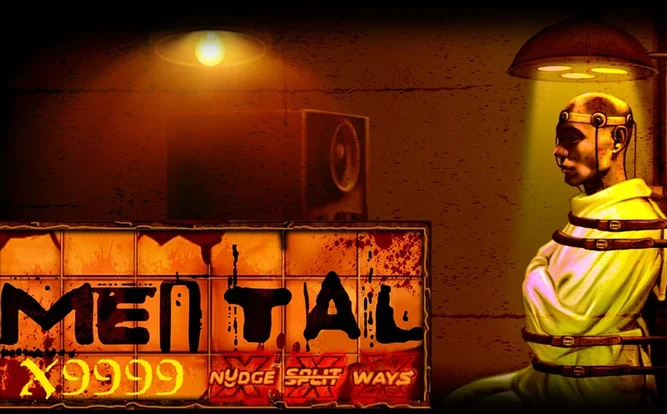
There can be long stretches with no wins, but when one hits, it can hit big. Most games with a max multiplier in the tens of thousands or more fall here. Nolimit City games like Mental and San Quentin xWays, with max wins in the tens to hundreds of thousands of times your bet, are typical examples.
Relationship to hit frequency and max multiplier
Generally, the lower the hit frequency and the higher the max multiplier, the higher the volatility. For example, Nolimit City’s Tombstone RIP has a hit frequency of about 9.39%. But it’s not always the case. San Quentin xWays is rated Extreme, yet its hit frequency is high at about 34.25%. That’s because small wins come often, while big wins are clustered in extremely rare moments. So volatility should be judged not by hit frequency alone but together with the max multiplier and how often the bonus is triggered.
Difference from RTP
| Category | RTP | Volatility |
|---|---|---|
| Meaning | Return rate over the long run | The distribution of how often wins land and how big they are |
| Display | Percentage (e.g., 96.5%) | Levels (Low to Extreme, 1 to 5, 1 to 10) |
| Feel of short sessions | Barely noticeable | Felt right away |
| Verification | Certified by testing labs | Provider’s own rating (regulated only in some jurisdictions) |
Feel and playing time
RTP is a long-term average, so you won’t experience it exactly in a single session. What you actually feel is volatility and hit frequency. One analysis suggests that to see a similar number of meaningful wins for the same amount, a game with a 20% hit frequency needs roughly twice the budget of a game with a 40% hit frequency. Keep in mind that higher volatility means bigger swings in results, and try the free demo first to get a feel for how a game behaves.