


Tumble (Cascade) Complete Analysis – The History of Chain Slots from Gonzo’s Quest to Sweet Bonanza
Where did tumbles (cascades), in which winning symbols disappear and new symbols fall in, begin? From the 2006 WMS patent and the 2010 Avalanche in Gonzo’s Quest to Bonanza’s unlimited multiplier, Sweet Bonanza’s multiplier symbols, and Fire In The Hole’s grid expansion, here is the 15-year evolution of cascading slots, backed by data.

Key takeaways
- Tumble is a feature where winning symbols disappear and new symbols drop into the empty spaces, aiming for consecutive wins within a single spin. Cascade, Avalanche, Tumbling Reels, and Reactions all work on the same principle.
- WMS Gaming filed a cascading symbol patent in 2006 (granted in 2012), and online, NetEnt’s Gonzo’s Quest in March 2010 became the signature title.
- It then evolved into Bonanza (unlimited multiplier), Reactoonz (clusters), Sweet Bonanza (summed multiplier symbols), and Fire In The Hole (grid expansion).
- All cascades are covered by a single bet, and the character of the game varies greatly depending on the multiplier structure.
Tumble is a slot feature where winning symbols disappear from the screen and the symbols above drop into the empty spaces, giving you a shot at new wins. Multiple wins can chain within a single spin on one bet. The name varies by provider, such as Cascade, Avalanche, Tumbling Reels, or Reactions, but the way it works is the same.
Tumble is now so common that a large share of new slots include it. It wasn’t always that way. This in-depth guide traces tumble in chronological order: where it started, who changed it and how, and what shape it takes today. If you just want the basic definition quickly, you can check the wiki entry on tumble first.
How tumble works
A round of a tumble slot goes in this order.
- Step 1 – Spin: The reels spin as usual and the symbols come to a stop.
- Step 2 – Win evaluation: If there is a winning combination, a payout is awarded.
- Step 3 – Removal: The symbols used in the win explode or disappear.
- Step 4 – Drop: Symbols above fall into the empty spaces, and the top is filled with new symbols.
- Step 5 – Repeat: If the new screen has another win, the process returns to Step 3. When there are no more wins, the round ends.
The important point is that this whole process is covered by a single bet. Even if the cascade runs 10 times, money leaves your balance only once, on the first spin. And there is nothing the player can do during the cascade. A cascade is simply the result of that spin unfolding on the screen step by step.
Tumble timeline at a glance
- May 2006: US-based WMS Gaming files a patent for a “cascading symbol feature” (granted in 2012)
- March 2010: NetEnt releases Gonzo’s Quest, whose Avalanche feature makes it the signature online cascading slot
- 2013: Grid-based cascading slots such as Play’n GO’s Energoonz appear
- December 2016: Big Time Gaming’s Bonanza combines Megaways with cascades (“Reactions”) and an unlimited multiplier
- October 2017: Play’n GO’s Reactoonz gains popularity with its 7×7 grid and cluster cascades
- June 2019: Pragmatic Play’s Sweet Bonanza establishes the tumble and summed multiplier symbol formula
- March 2021: Nolimit City’s Fire In The Hole opens a new row with each cascade and sets off xBomb explosions
- September 2025: NetEnt’s Gonzo’s Quest II combines the Avalanche with an expanding reel in its official sequel, 15 years later
The Beginning – Land-Based Slots and the WMS Patent
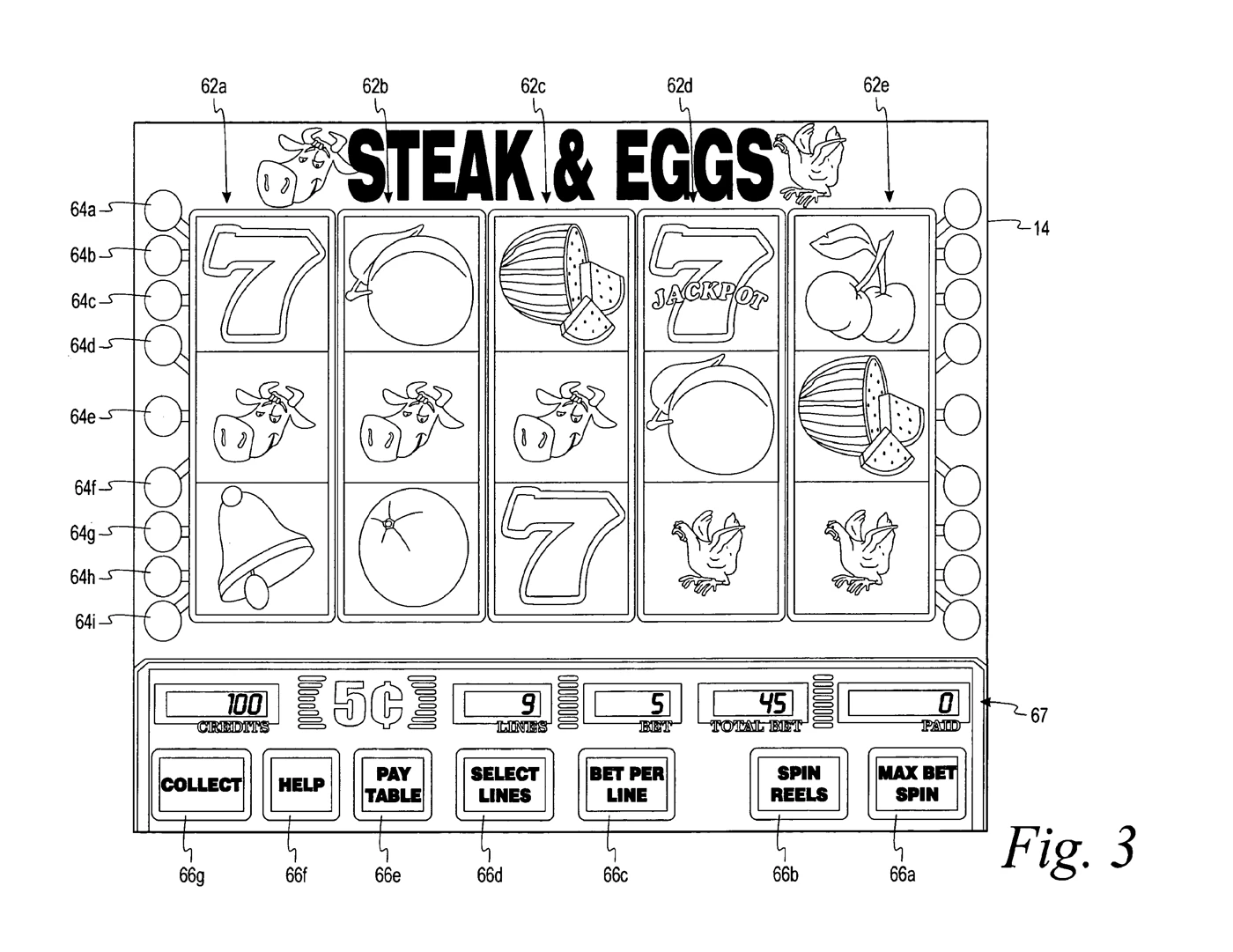
The idea of cascades took shape in the land-based slot machine industry before online. US slot machine manufacturer WMS Gaming filed a patent in May 2006 titled “Gaming system with cascading symbol feature.” The patent was granted in June 2012 as US Patent No. 8,192,275.
The structure described in the patent document is almost identical to today’s tumble. When a winning combination lands, some symbols are removed, the symbols above fall down to fill the gaps, and new symbols enter at the top. The patent drawings even include an example game screen with classic symbols like cherries, watermelons, and 7s. WMS was later acquired by Scientific Games in 2013 for $1.5 billion, and Scientific Games became today’s Light & Wonder.
Another major manufacturer, IGT, calls its cascade feature by the trademark “Tumbling Reels™.” The practice of giving the same principle a company-specific name goes back to this period.
Gonzo’s Quest – The Icon of Online Tumbles
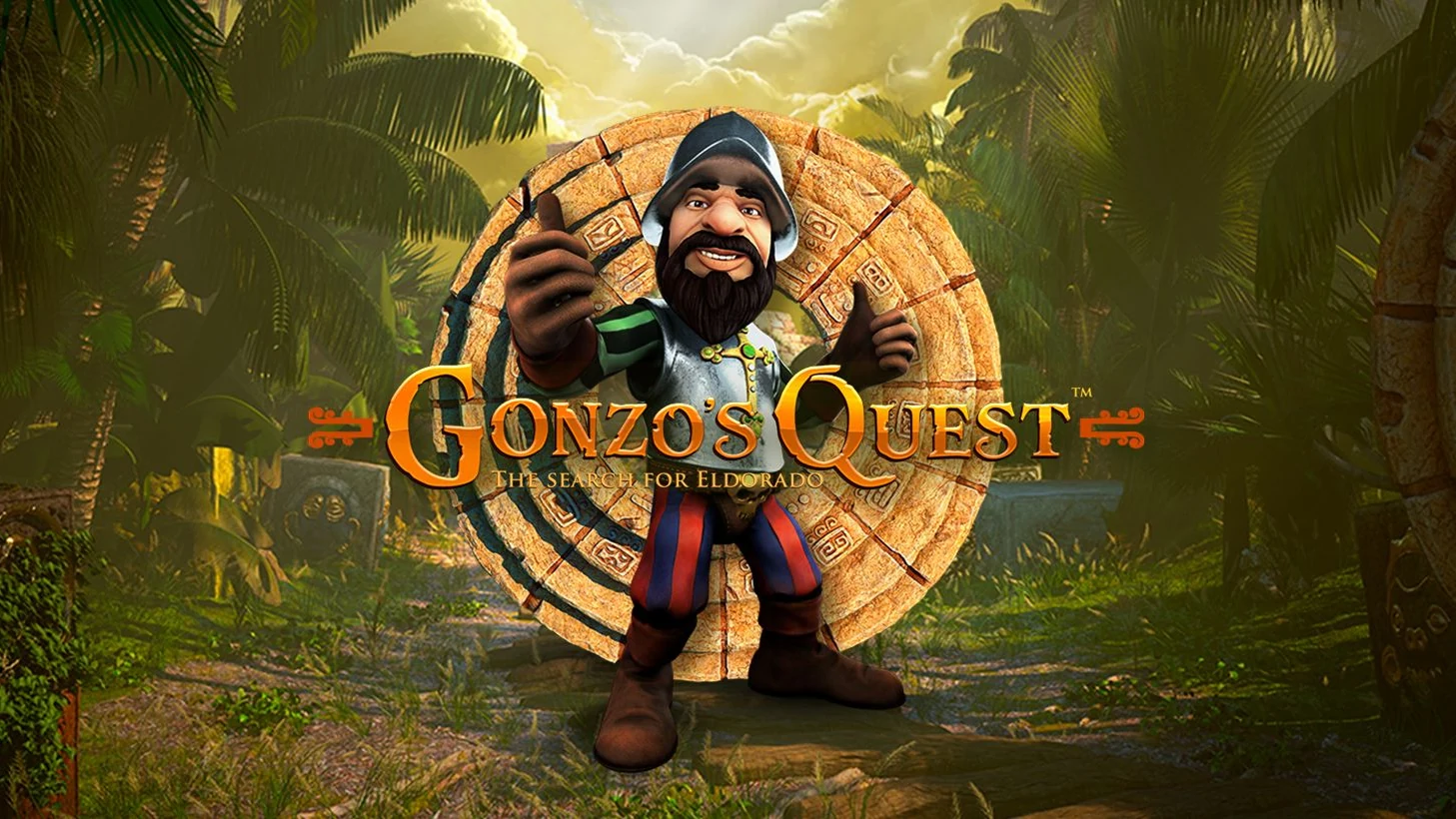
The game that popularized cascades in online slots is NetEnt’s Gonzo’s Quest. According to official NetEnt game information, its release date is March 15, 2010. Some review sites list it as 2011, but the developer’s records say 2010.
Instead of spinning the reels, Gonzo’s Quest has stone blocks drop in from above. Winning stones break and vanish, and new stones tumble down from above. NetEnt named this the “Avalanche™” and still presents it as its signature mechanic today.
Avalanche Multipliers – Rewarding the Cascade
What made Gonzo’s Quest innovative was not the cascade itself but the rule that the multiplier rises the more you cascade.
- Base game: 1x on the 1st cascade, 2x on the 2nd, 3x on the 3rd, and 5x from the 4th
- Free Fall (free game): 3x, 6x, 9x, 15x
- Free Fall is awarded with 3 scatters for 10 spins, and if 3 scatters land again during Free Fall, 10 more spins are added
When the cascade breaks, the multiplier returns to the start. Thanks to this simple rule, players feel the tension build with every cascade, and this “multiplier ladder” became the basic framework for countless tumble games.
Gonzo’s Quest by the Numbers
According to official NetEnt information, Gonzo’s Quest has an RTP of 95.97%, a hit frequency of 41%, and a max win of 2,200x the bet. It has a 5-reel, 3-row, 20-payline structure. By today’s standards the max win is not large, but it remains one of the few classics still played steadily after more than 15 years.
Grids and Clusters – Play’n GO’s Experiment
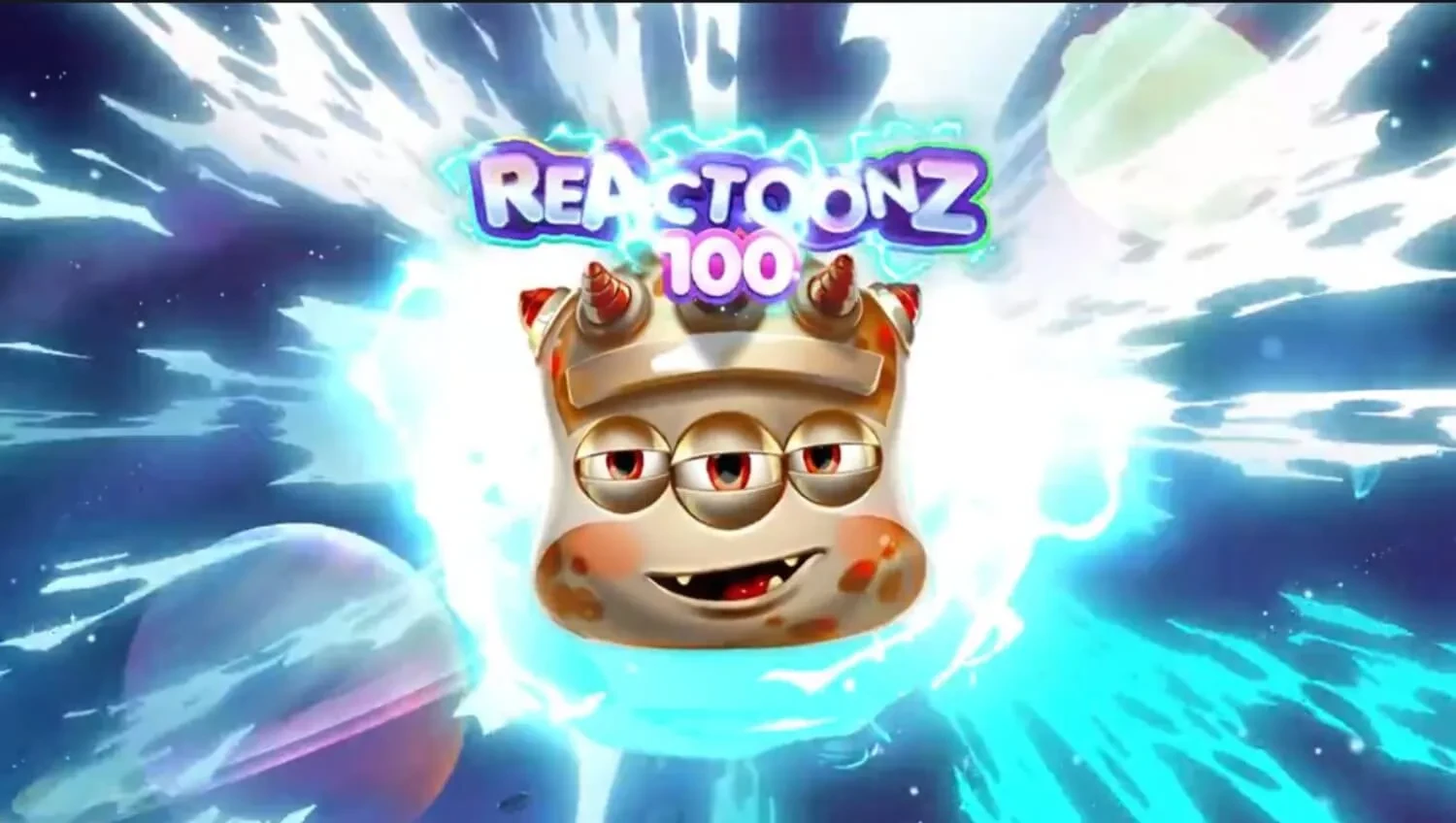
If Gonzo’s Quest popularized cascades by the reel, Play’n GO moved them onto the grid. After Energoonz in 2013, the signature title is Reactoonz, released on October 23, 2017.
Reactoonz is a cluster game on a 7×7 grid where 5 or more of the same alien symbol touching each other form a win. The winning cluster disappears and new aliens fall in from above. Because cluster pays is hard to make work without cascades, nearly every cluster slot since then uses cascades as well. In Reactoonz, a gauge fills up as cascades accumulate and triggers special features, showing a design that “uses the cascade count itself as a resource.”
Bonanza – Megaways and the Unlimited Multiplier
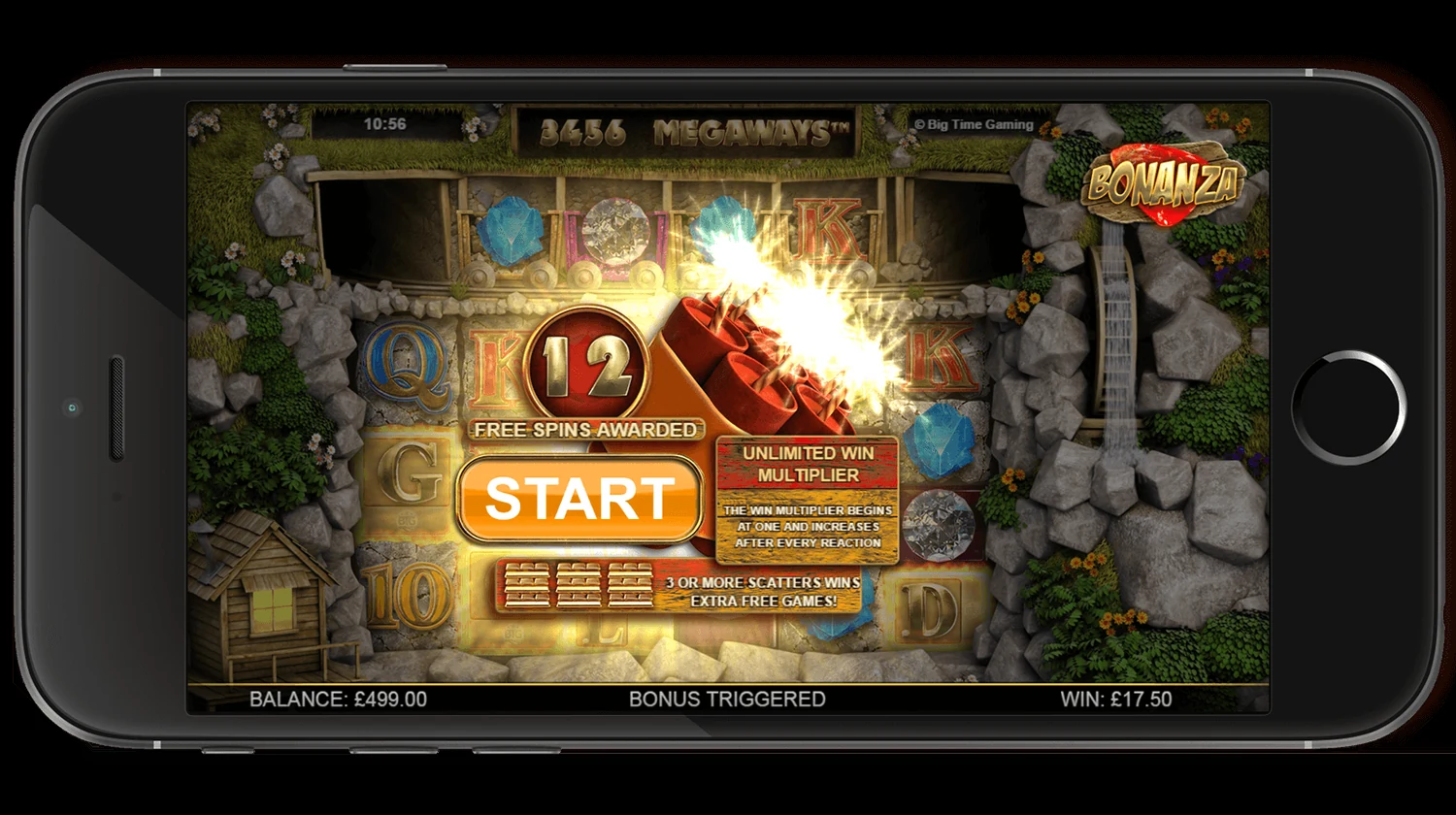
In December 2016, Big Time Gaming’s Bonanza combined cascades with Megaways. Big Time Gaming calls cascades “Reactions.” In Bonanza’s free spins, the multiplier rises by 1 with every Reaction, and there is no cap on the multiplier.
If Gonzo’s Quest’s multiplier ladder stopped at 15x, Bonanza removed that ceiling. Because Megaways changes the winning paths on every spin, cascades can run long, which paired well with an unlimited multiplier. This combination became the basic formula for later Megaways games. The story of how Megaways came about is covered in detail in a separate guide.
Sweet Bonanza – Pragmatic Play’s “Tumble” Formula
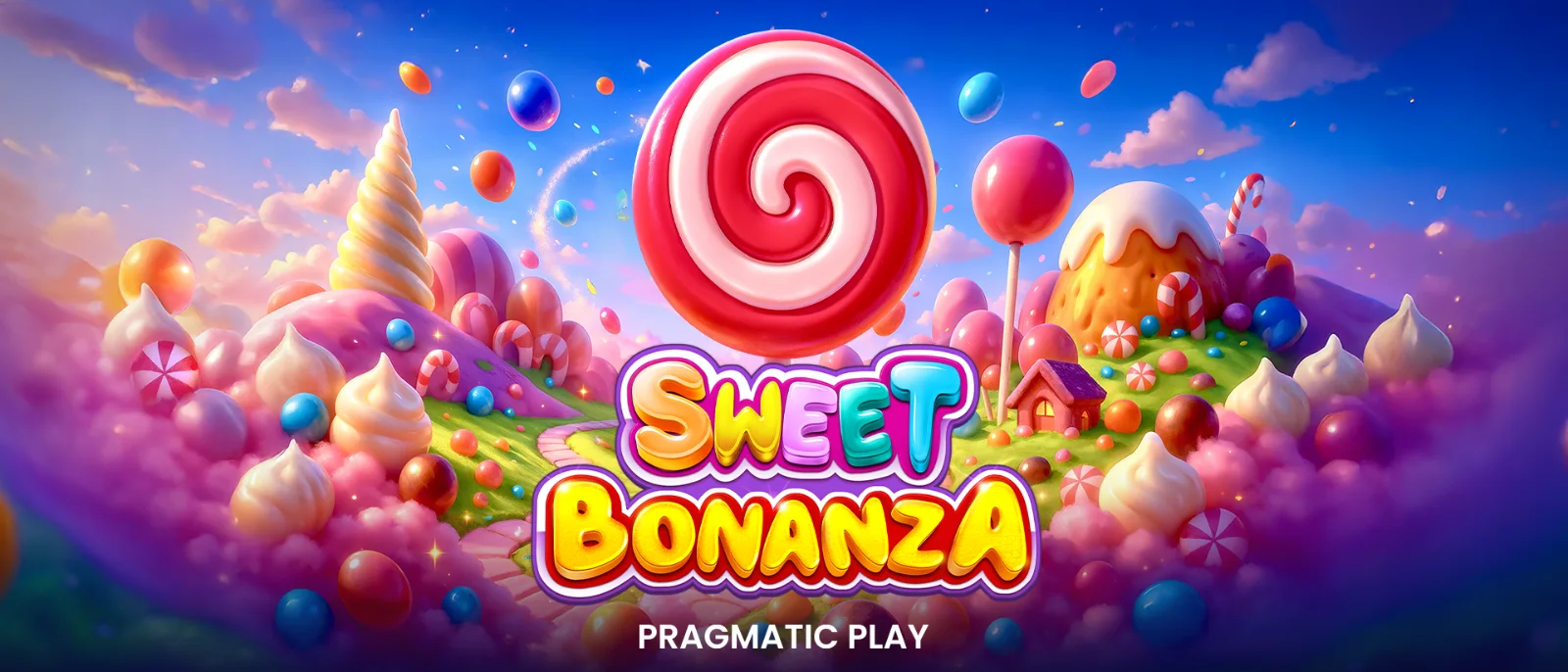
Pragmatic Play did the most to popularize the name “tumble.” Sweet Bonanza, released in June 2019, combined tumble with a scatter pays system on a 6×5 screen where 8 or more of the same symbol anywhere wins.
The key is the multiplier symbols in free spins. During free spins, multiplier symbols from 2x to 100x drop, and once the tumble chain is completely finished, all the multiplier values on screen are added together and applied to that round’s win. The longer the chain runs, the more chances multiplier symbols have to pile up on screen. The official RTP is 96.48% and the max win is 21,175x.
This formula carried on through Gates of Olympus in 2021, and later hits like Starlight Princess and Sugar Rush, becoming Pragmatic Play’s trademark. That is also why Pragmatic Play has the most games among the tumble games listed on AI Slot.
Fire In The Hole – The chain expands the board
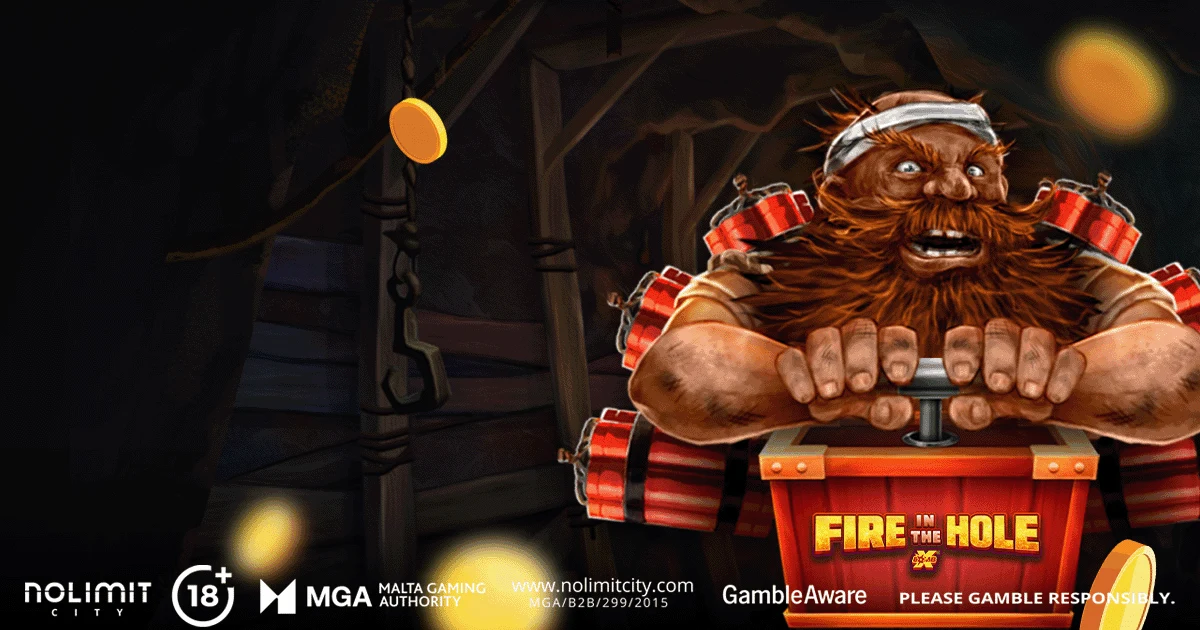
Nolimit City added “grid expansion” and “destruction” to cascades. Fire In The Hole, released on March 2, 2021, starts on a 6×3 screen (the starting number of ways is listed differently depending on the source, as 64 ways or 486 ways). Each time a win triggers a cascade, a blocked row opens up, expanding the screen to as much as 6×6 with 46,656 ways.
On top of this comes xBomb, Nolimit City’s xMechanics feature. When an xBomb wild explodes, it clears the surrounding symbols and raises the multiplier for the next cascade. The cascade is no longer just “another chance to win” but an “engine that widens the grid and grows the multiplier.” According to official information, the RTP is 96.06% and the max win is 60,000x.
Gonzo’s Quest II – The Original Returns
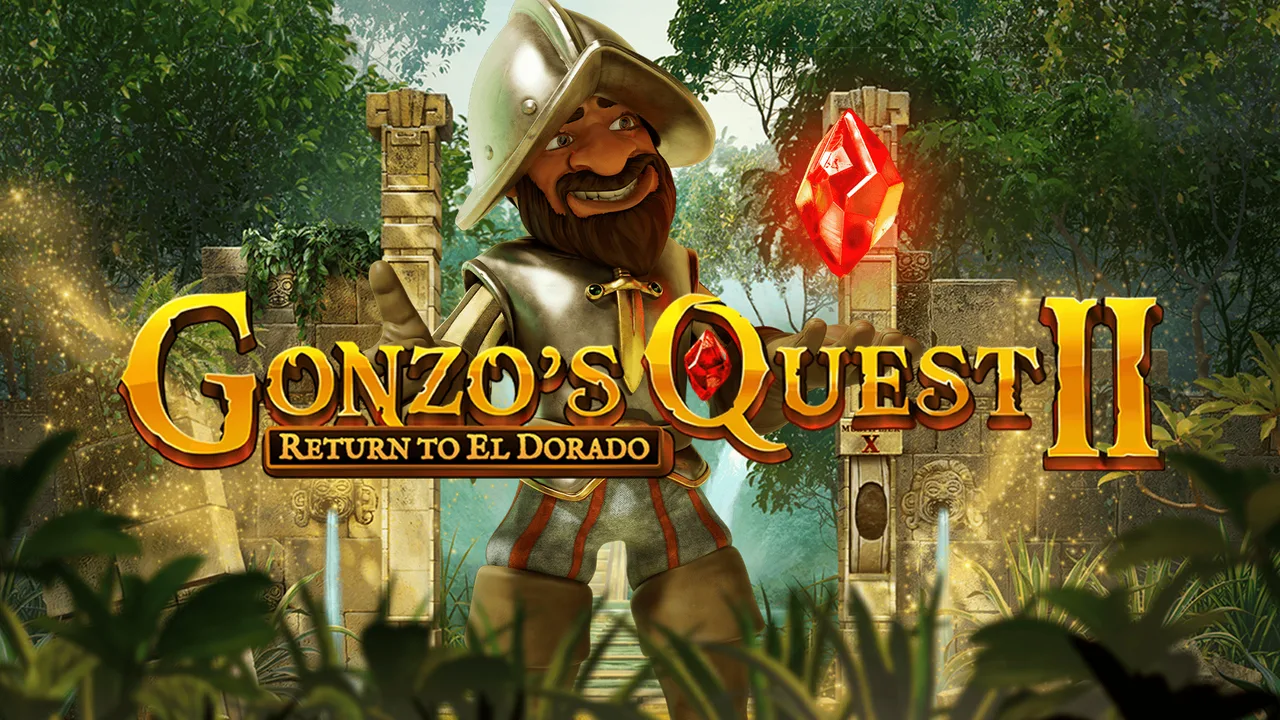
On September 25, 2025, NetEnt released Gonzo’s Quest II: Return to El Dorado, the official sequel to Gonzo’s Quest, about 15 years after the original. It keeps the Avalanche and adds an expanding reel: with each win, a row is added above the screen, growing up to 8 rows. In effect, the original has adopted the “expanding grid” idea from later games like Fire In The Hole. You can see how the tumble feature has evolved over 15 years within a single game.
Different Names, Same Principle
Each company calls tumble by a different name. When you see any of the names below in a search or a game description, you can treat them all as the same family of feature.
- Tumble: Pragmatic Play and others
- Avalanche™: NetEnt, Gonzo’s Quest series
- Tumbling Reels™: IGT
- Reactions: Big Time Gaming, Bonanza series
- Cascading Reels: the most common name in the industry
- Rolling Reels, Drop Down Win, and more: other providers’ terms
Tumble by the Numbers from AI Slot Data
Games per provider
Top 5 games by max win
- Fireworks Megaways - Big Time Gaming, Max 150,335x, RTP 96.44%
- Max Megaways 2 - Big Time Gaming, Max 147,620x, RTP 96.64%
- Max Megaways - Big Time Gaming, Max 139,200x, RTP 96.37%
- Spicy Meatballs - Big Time Gaming, Max 124,880x, RTP 96.6%
- Max Megaways 3 - Big Time Gaming, Max 101,830x, RTP 96.36%
Features that often appear together
The data shows that tumble is no longer one provider’s feature but a common grammar across the industry. Almost every provider in the header has released tumble games, with Pragmatic Play, Yggdrasil, PG Soft, and Play’n GO having especially many. The most common companion feature is free spins, followed by multipliers and clusters. This means the “cascade + multiplier” formula Gonzo’s Quest created in 2010 and the “cluster + cascade” combination Reactoonz showed are still the standard today.
How to read the numbers in tumble games
Why the Hit Frequency Looks High
Tumble games can pay out several times in a single spin, so the hit frequency feels high. However, the hit frequency listed in game info is usually the ‘share of spins that win at least once.’ Even if a chain runs five wins deep, it counts as one in the hit frequency calculation. Keep in mind that a screen that bursts often doesn’t mean you actually win often.
Each Individual Cascade Pays Little
To keep cascades going, tumble games often set individual win payouts low. Big wins mostly come when a cascade runs long and the multiplier stacks up. That is why tumble games tend to have a rhythm of staying quiet in the base game and then bursting big at certain moments.
The Multiplier Structure Sets the Character
Even among tumble games, the character of the game differs completely depending on the multiplier structure.
- Ladder type (Gonzo’s Quest): The multiplier rises to a set step and then stops. It is relatively stable.
- Unlimited growth type (Bonanza): The multiplier keeps climbing as long as the cascade continues, which raises volatility.
- Summed multiplier symbol type (Sweet Bonanza, Gates of Olympus): Multiplier symbols that land are added up at the end of the cascade. Variance from round to round is very large.
- Board-expanding type (Fire In The Hole, Gonzo’s Quest II): the more you chain, the larger the screen and the paths to win become.
If you try a tumble game in demo mode, first check how many cascades usually chain together, how the multiplier rises, and what changes in the free spins.
FAQFrequently Asked Questions
Are tumble and cascade different features?
They are the same feature. Winning symbols disappear and new symbols fall in, and each provider simply calls it by a different name. Pragmatic Play calls it Tumble, NetEnt calls it Avalanche, IGT calls it Tumbling Reels, and Big Time Gaming calls it Reactions.
Do you spend more money when a tumble chain continues?
No. All cascades are covered by the single bet placed on the initial spin. No matter how many cascades occur, there are no additional bets.
What was the first tumble slot?
In online slots, NetEnt’s Gonzo’s Quest, released in March 2010, is considered the signature title that popularized the cascade feature. Offline, development was under way around the same time, with WMS Gaming filing a cascading symbol patent in 2006.
Does having tumble mean a higher RTP?
Whether a game has tumble and its RTP are not directly related. RTP is set by the math design of the whole game. Tumble is a device that changes how wins are distributed within the same RTP.
Can cascades continue indefinitely?
In theory they can continue many times, but in practice, as a matter of game design, the probability of a long cascade drops sharply. Also, most games have a max win cap, and when that cap is reached, the round ends.
Who are tumble games a good fit for?
It suits people who enjoy a dynamic flow where the screen keeps changing within a single spin. On the other hand, if you prefer simple slots where the result comes right away, long chain animations may feel drawn out.
Related reads
You can read about the history of Megaways, the feature most often paired with cascades, in the Megaways Explained guide, and why feature names differ by company in the wiki’s mechanic brands entry. If you want to try the original cascading game yourself, you can open the Gonzo’s Quest demo right away from the NetEnt free slots list.
Sources: NetEnt official game info, Google Patents (US 8,192,275 B2), Wikipedia (WMS Gaming), Play’n GO official game info, European Gaming (Sweet Bonanza launch coverage), Pragmatic Play official game info, Nolimit City official game info, OLBG, AI Slot registration data