


Slot RNG Deep Dive - How the Result Is Decided the Moment You Press Spin, and 7 Common Myths
The spinning reels are only an animation of a result that has already been decided. We follow how an RNG picks numbers and turns them into symbols, and check common myths such as “it is due to hit” or “hot slots” against testing lab standards and regulator rules.

Key Takeaways
- An online slot result is decided by the game server RNG right after you press spin. GLI-19 says the logic that generates results must not sit on the player device.
- Every spin is independent. GLI-19 bans adjusting bonus odds or RTP based on past wins, and the UK Gambling Commission prohibits games that compensate for previous results.
- “It is due”, “hot slot” and “so close” all assume behavior that the standards explicitly forbid.
- Test labs review the RNG source code and the scaling and mapping code, then check final outcomes with statistical tests at a 99% confidence level (GLI-19).
Anyone who plays slots has thought “after this many spins, it must hit soon”. But a slot has no part that remembers past results and adjusts the next one. The result is decided by the RNG (random number generator), and the reels on screen are just a picture that presents that result.
This guide first lays out in four steps how an RNG decides a result, then checks seven myths often seen in slot communities against the testing lab GLI standards (GLI-11, GLI-19) and the UK Gambling Commission Remote Technical Standards (RTS).
One Spin in Four Steps - From Button to Screen
- Button: you confirm the bet and press spin. GLI-11 defines the start of a game cycle as the moment a wager is placed or the play button is pressed.
- RNG: the server RNG draws numbers. In online games this happens on the gaming platform, and the player phone or PC plays no part.
- Symbol mapping: the drawn numbers are turned into stop positions on the reel strips or into symbols. This conversion (scaling and mapping) is also checked by test labs.
- Result display: the device receives the result set by the server and shows it as a reel spin animation. The length or effects of the animation do not change the result.
Myth 1. “The result is set when the reels stop, so stop them at the right moment”
It is the opposite. The result is already set on the server right after you press spin, and the few seconds of spinning reels are an animation heading toward that result. GLI-19 (version 3.0, July 2020), the GLI standard for online gaming, states that the player software must not contain any logic used to generate game results, and that critical functions including outcome generation must run on the gaming platform, independent of the player device.
So quick spin, turbo or a stop button only shortens the animation.
Myth 2. “I see lots of cherries on the reels, so cherries are likely”
The symbols you see and the real odds can differ. Each reel has a symbol list, the reel strip, far longer than the few cells on screen, and the number drawn by the RNG becomes a stop position on that strip. How many times a symbol appears on the strip, and how much weight each position gets, is what sets that symbol odds.
Take a made-up example for illustration. If a reel strip has 100 positions with 10 cherries and one 7, and the RNG picks a number from 0 to 99 evenly, a cherry lands on the middle row 10% of the time and a 7 only 1%. The cherry and the 7 each look like one cell on screen, yet their odds differ tenfold. GLI-19 likewise says each RNG selection should be equally likely, but where the game design specifies a non-uniform distribution, the final outcome must follow that intended distribution.

Strip layouts are not published, but the rules cannot be hidden. GLI-11 (version 3.0) requires that if a symbol appears only in a bonus game or only on a specific reel strip, the in-game artwork must disclose that limitation. That is why a classic such as Wolf Gold, whose stacked wilds sit on specific reels, states it in the rules screen.
Myth 3. “It has not paid for ages, so it is due”
Each spin is an independent trial, so 100 losing spins do not raise the odds of the 101st. In its RNG requirements, GLI-19 says that knowing the numbers from one draw must give no information about the numbers in a future draw, and in its game requirements it forbids adjusting the likelihood of a bonus or feature based on the history of past wins.
The UK Gambling Commission Remote Technical Standard RTS 7A is more direct. It states that compensated games, where outcomes are adjusted according to previous results, are not permitted. Thinking “I have lost this much, so it owes me” is expecting behavior the standards forbid. This way of thinking is covered in the wiki entry on the gambler fallacy.
Myth 4. “This slot is hot right now, that one has gone cold”
Hot and cold talk comes from seeing a short run of results and believing the slot has a state. But GLI-19 forbids a game from changing its theoretical RTP based on past payouts, and requires the mathematical probability of any chance event to stay constant unless the game artwork says otherwise. A slot that paid well today and one that did not are running on the same probability table, and the difference comes from random swings, that is, volatility.
Myth 5. “Two 7s lined up and the third just missed, it almost hit”

A loss is just a loss. Looking close on screen does not change the odds of the next spin. More importantly, the standards forbid deliberately creating “near misses”. GLI-19 does not allow a game, when the RNG picks a losing outcome, to swap it for a different losing outcome to show the player. UKGC RTS 7C likewise prohibits falsely displaying losing outcomes as near misses, and any design that misleads players about the likelihood of results.
Myth 6. “An RNG is just a formula, so you can find a pattern or predict it from the time”
A software RNG does produce numbers with a fixed algorithm, which is why the standards add conditions against predictability. GLI-19 requires the RNG that decides outcomes to be “cryptographically strong”, meaning even an attacker who knows the source code must not be able to compute or estimate future values from past ones. It also bans seeding the RNG from a time value alone, and requires its internal state to be refreshed periodically with external entropy.
Myth 7. “The operator secretly changes the odds whenever it wants”
In regulated markets a game cannot change its rules, payouts or odds without notice while it is live. UKGC RTS 7D bars changing rules, payouts or probabilities while a game is available, except as its rules provide, and requires any permitted change to be brought to customers attention. Its guidance adds that changes should generally be made with the game offline or suspended. RTS 7B requires games to be implemented according to the rules and payouts disclosed to customers, using random numbers in the order received.
The myth has a real root. The same game can be offered at one of several certified RTP settings chosen by the operator. That is not “secretly changing” anything but picking one of the pre-certified versions, and it can be checked through the RTP shown in the in-game rules. Details are in the wiki entry on RTP versions and our RTP versions deep dive.
How RTP and the RNG Relate
The two are often mixed up, but they do different jobs. The RNG draws a fair number for every spin, while RTP is the theoretical share returned over a very long period by the whole set of rules that turn numbers into symbols, the reel strips and the paytable. With the same RNG, different strips and paytables give a different RTP. That is why RTP versions can have “the same screen but a different probability table”.
So RNG certification means “results are random and follow the intended distribution”, not a promise that “this game returns its RTP over a short session”. GLI-19 sets a default that a house-banked game must theoretically pay out at least 75% over the expected lifetime of the game, unless the regulator specifies otherwise. A few hundred spins can land far from the RTP, and how far depends on volatility and the hit rate.
Test Labs and Standards - What Each One Checks
Saying an RNG is fair is not just the game maker claim. To launch in a regulated market a game must pass an independent test lab, and the lab tests against standards the regulator accepts. GLI-19 has the lab review the core RNG algorithm and the scaling, shuffling and mapping code for bias, implementation errors, malicious code and undisclosed switches or parameters, and run statistical tests on the final outcome output at a 99% confidence level. The table below sums up what we confirmed in official documents.
| Body / standard | Type | What it checks on the RNG |
|---|---|---|
| GLI-11 v3.0 | Lab standard (land-based gaming devices, September 2016) | Source code review, statistical tests at 99% confidence, RNG state change between games, disclosure of symbols limited to specific reel strips |
| GLI-19 v3.0 | Lab standard (interactive gaming systems, July 2020) | Outcomes generated on the platform, cryptographic strength, independence, no near-miss substitution, accuracy of free play mode |
| UKGC RTS 7 | UK regulator technical standard | Acceptable randomness, no compensated games, fair implementation, no misleading design, no unannounced changes |
| UKGC RTS 6 | UK regulator technical standard | Free games must use the same rules and prize distribution as the real money game on the same site |
| eCOGRA | Independent testing and certification body | Source code review, statistical analysis of output, unpredictability of seed generation, resistance to attacks, periodic retesting |
| iTech Labs | Independent testing and certification body | Source code evaluation, testing of raw numbers and scaled or shuffled output, RTP and RNG audits from server logs |
| BMM Testlabs | Independent test lab | RNG testing, math analysis (RTP and odds), source code analysis, volatility analysis |
Profiles of each body are in the wiki entries on GLI, eCOGRA, iTech Labs, BMM Testlabs and the UK Gambling Commission.
What a Demo Can and Cannot Tell You
The usual suspicion about free demos is that “demos are rigged to pay more”. Regulatory standards address this directly. UKGC RTS 6A requires free games to use the same rules as the real money game on the same site, ideally the same RNG, and a matching prize distribution. Its guidance also says that a demo on a non-operator site with unusually high returns, designed to show bonus features, must be identified as such. GLI-19 likewise says free play mode must accurately represent the normal operation of the paid game and must not mislead players about the likelihood of winning.
That said, these are principles the regulatory standards require. We have not found an official statement from the game makers confirming that every demo uses exactly the same math model as the real game. With that in mind, here is what a demo is and is not good for.
What a demo can show
- Rules and paytable, what wilds and scatters do, and how bonuses trigger
- The RTP shown in the rules screen and the max win message
- How the rhythm of wins and dry spells feels, a sense of the volatility
- Game speed and screen features such as turbo and autoplay
What a demo cannot show
- The next result or a “lucky time of day” - every spin is independent
- Verifying the real RTP from a few hundred spins - RTP is a theoretical value over a very long run
- Which RTP version a given site actually runs - check the in-game rules screen on that site
- The actual reel strip layout and symbol weights - game makers do not publish them
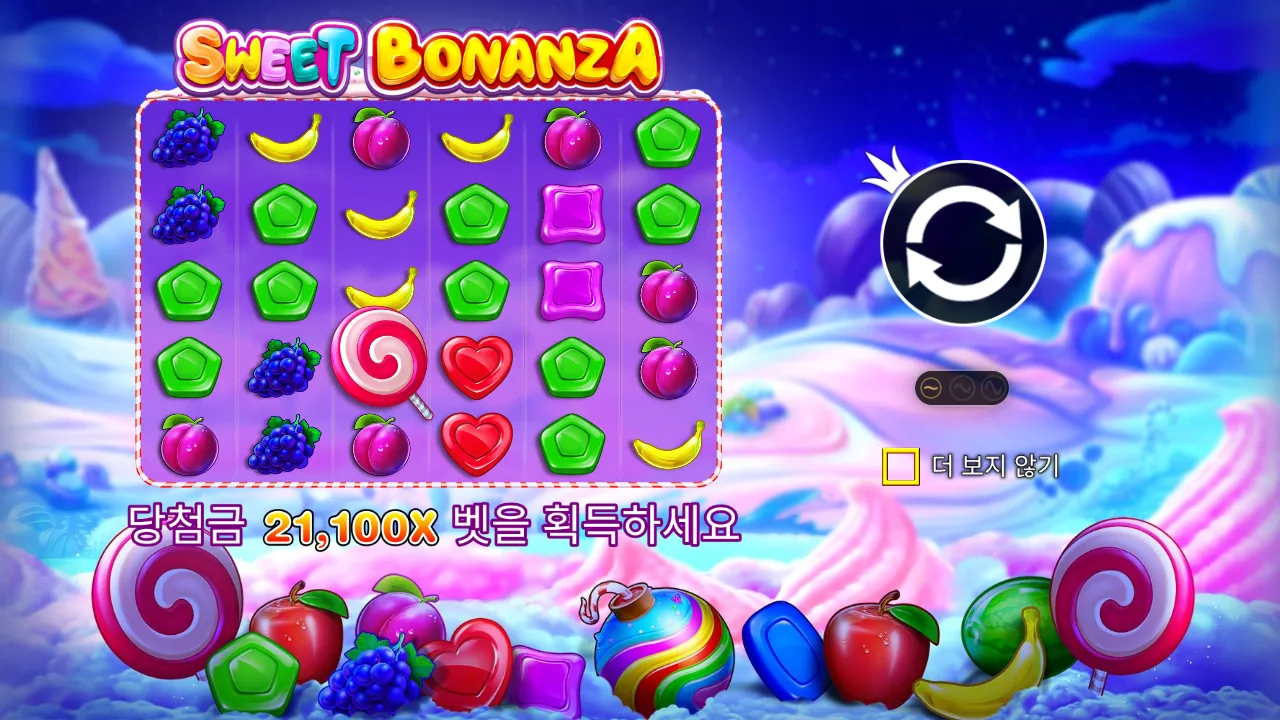
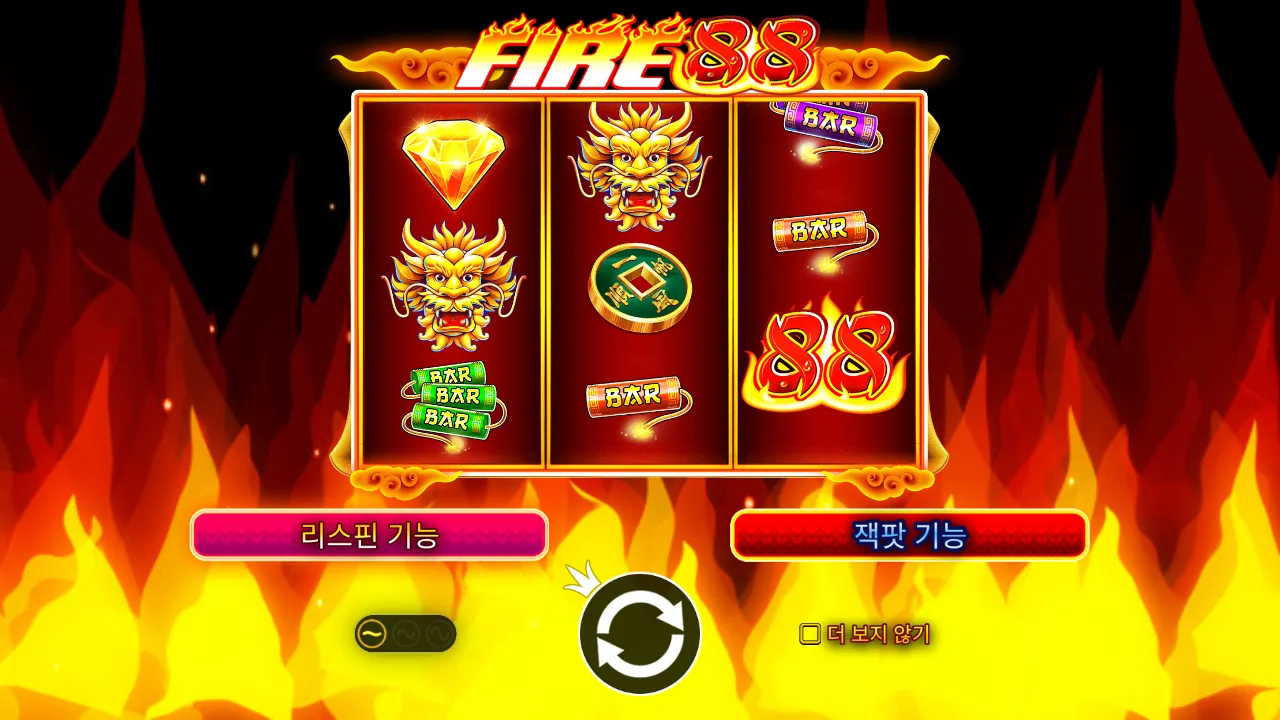
In the end a demo is a tool for learning, without staking money, “what this game looks like and the rhythm it moves in”. Switching between games with completely different structures, such as Sweet Bonanza and Fire 88, lets you feel how much the reel layout and paytable change the experience on top of the same RNG principle.
Frequently Asked Questions
When exactly is a slot result decided?
When you press spin and the game cycle starts, the server RNG draws numbers and sets the result. The spinning reels only present that result, so a stop button or turbo does not change it.
Is a slot that has not paid for a long time more likely to pay soon?
No. Every spin is independent. GLI-19 forbids changing bonus odds or RTP based on past wins, and UKGC RTS 7A does not allow games that compensate for previous results.
If the RNG is certified, will I get the RTP back?
RNG certification confirms that results are random and follow the intended distribution. RTP is a theoretical value over a very long run, so a short session can differ greatly from it.
Are free demos set to pay more than the real game?
UKGC RTS 6A and GLI-19 require free play to accurately reflect the rules and winning chances of the real game. We have not, however, found an official statement from game makers that every demo uses the same math model.
Related Reading
The truth about RTP versions · How to verify Pragmatic Play games · Wiki: RNG · Wiki: virtual reels and reel strips · Wiki: gambler fallacy · Wiki: basic probability terms
Sources: GLI-11 Gaming Devices v3.0 (2016), GLI-19 Interactive Gaming Systems v3.0 (2020), GLI press release (September 2016), UK Gambling Commission Remote Gambling and Software Technical Standards RTS 6 and RTS 7, eCOGRA RNG certification page, iTech Labs official FAQ, BMM Testlabs services page, Pragmatic Play official demo screens